REVIEW | TERRA INVICTA | A HEAVY STRATEGY GAME THAT EARNS RESPECT
Some strategy games are built to entertain quickly. They give the player a clear loop, a clean tutorial, a few early victories and a smooth path toward feeling smart. This one is not built like that. This is a slow, demanding, complicated and sometimes exhausting grand strategy experience about humanity facing an alien arrival while failing to act like one united species. That is the part that makes it interesting. The invasion is not only a military problem. It is political, ideological, economic, scientific and psychological. Before spaceships start firing at each other, the real battle is already happening inside governments, research programs, public opinion, intelligence networks and hidden power structures. That is also why this game immediately feels different from many sci-fi strategy titles. It does not treat Earth as a simple starting base before the “real game” begins in space. Earth is part of the war. Nations matter. Influence matters. Public opinion matters. The human factions do not simply disagree for flavor text. They represent different ways humanity might react to something impossible: resist, cooperate, exploit, escape, worship, control or surrender in their own way. That gives the campaign a darker and more believable political foundation than a simple “humans versus aliens” story.
a strategy game that actually feels large
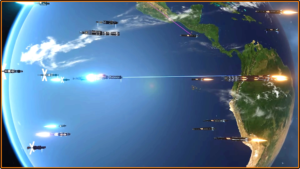
The strongest thing here is scale. Not fake scale, not a huge map with shallow systems, but real strategic scale that slowly expands over time. You begin with influence, councilors, research and national control, but the campaign gradually stretches into orbit, the Moon, Mars, asteroids and deeper parts of the Solar System. The game makes that expansion feel earned. Space is not just the next background. It is infrastructure, fuel, mining, shipyards, stations, propulsion, weapons and logistics. That slow climb is one of the best parts of the experience. Many strategy games let players reach space like it is just another upgrade. Here, the first real step into space feels fragile and expensive. A mining base matters. A station matters. A ship design matters. It feels like humanity is crawling toward survival, not casually unlocking a new map layer. That gives every stage of progress more weight. The Solar System also feels like a real strategic space instead of decoration. Resources are not abstracted into one simple pile. Different bodies matter for different reasons. Orbital positions matter. Distance matters. Building a fleet is not just about having the biggest number. You need industry, materials, technology and time. That makes long-term planning satisfying, but also punishing. If you ignored something important hours earlier, the game may remind you much later. That is the kind of design some players will love and others will run from. Terra Invicta is not interested in constant rewards. It wants the player to think ahead, fail, adjust and accept that some plans are bad before they look bad. That is frustrating, but it is also what gives the game its identity.

the earth layer is more than an opening act
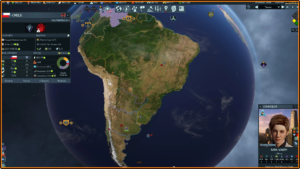
The geopolitical layer is where the game first shows its teeth. Before the alien war becomes direct, the player is trying to build influence across Earth. Councilors investigate, persuade, control, sabotage, assassinate, advise and manipulate. Governments can be guided. Public opinion can shift. Rival factions can damage your plans without ever firing a shot. That makes the early game feel like a shadow war before the real war. This part works because the alien crisis does not magically unite humanity. That is probably the smartest narrative decision in the whole game. A lesser game would turn the planet into a single command structure and send everyone into space together. Here, humanity reacts in a messy, believable way. Different groups see different futures. Some want to fight. Some want to collaborate. Some see the crisis as a tool for power. Some are afraid. Some are fanatical. The result is a world that feels politically unstable before the first major space battle even happens. The councilor system gives this layer a strong rhythm. You are not moving armies across borders at first. You are placing people in the right places, deciding which nations matter, building networks and trying to stop rival factions from stealing momentum. It can feel cold, even bureaucratic, but that coldness fits the tone. You are not a heroic commander standing on a bridge yet. You are building the machinery behind humanity’s response. The game is at its best when those small actions feel connected to the larger future. Taking influence in a major country is not just a number. It can shape research, economy, military output and the future space race. Losing control of a region can hurt for a long time. Rival factions are not just annoying enemies; they are alternative futures trying to become reality.
space expansion feels earned
The transition into space is one of the most satisfying parts of the campaign because it does not feel automatic. You have to work for it. The game makes space industrialization feel like a serious human project. Stations, mines and ships do not appear because the story needs them. They come from investment, research, materials and strategic patience. That matters because the alien threat feels much larger than the player at first. You are not instantly ready. You are preparing. You are trying to build the foundation for a war you may not fully understand yet. The best moments come when the player realizes that Earth politics and space infrastructure are not separate games. They are connected. What happens on Earth affects what you can do in space. What you build in space changes your ability to survive the larger conflict. Ship design and fleet combat are ambitious systems. They can be difficult to read, and they are not always elegant, but they fit the serious tone. This is not colorful arcade space combat. Ships are technical, expensive and tied to real strategic choices. Propulsion matters. Weapons matter. Armor matters. Range matters. You are not just picking the strongest-looking hull. You are trying to understand what kind of war you are preparing to fight. That ambition can become heavy, but it also makes victories feel earned. A successful space battle is satisfying because it usually represents hours of preparation. The ship did not come from nowhere. The industry behind it came from decisions across the campaign. That connection between planning and payoff is exactly what serious grand strategy players usually want.

complexity is both the point and the problem
There is no honest way to talk about this game without talking about the learning curve. It is steep. Very steep. The game throws systems at the player with confidence, but not always with enough clarity. The UI can feel crowded. Some information is difficult to parse quickly. Some systems are explained, but not always in the way a new player needs. The first campaign can easily become a long lesson in how much you did not understand. For a certain type of player, that is almost part of the appeal. There is satisfaction in slowly learning how things connect. There is a real sense of mastery when the game starts to make sense. The problem is that the road toward that point can be rough. This is not friendly strategy design. It is dense, layered and sometimes stubborn. The midgame can also become heavy. Once the player has influence, space assets, research paths, rivals and alien activity to track, the game can stretch. Sometimes that stretch feels like deep strategic tension. Sometimes it feels like waiting while too many systems tick forward. The pacing will not work for everyone. Players who want a clean, fast campaign arc may bounce off hard. That is why this is not a simple recommendation. The game is impressive, but demanding. It rewards patience more than curiosity. You have to want this kind of experience. If you do, there is a lot here. If you do not, the game may feel like a giant machine built to punish your free time.

why it deserves respect
Even when it frustrates, it deserves respect because it is trying something rare. It is not a safe sci-fi strategy game. It is not trying to be a lighter Stellaris, a bigger XCOM or a simple alien invasion board game. It has its own structure and its own ambitions. It connects geopolitics, ideology, space expansion, alien pressure, research, industry and fleet warfare into one long campaign that feels genuinely different. That kind of design is valuable. PC strategy needs games that are willing to be dense and strange. Not every strategy game has to be smoothed down until it becomes comfortable. Some games should feel like systems you wrestle with. This is one of them. It has rough edges, but those rough edges are attached to ideas that are genuinely strong. The alien invasion also benefits from being slow. The threat does not only exist as a final boss. It sits over the campaign, changing the meaning of everything else. Every political fight feels smaller and larger at the same time. You are fighting rival humans while knowing that something worse is coming. That tension gives the game a special mood. Humanity may be in danger, but humanity is also part of the problem. That is the most interesting thing about the experience. It does not romanticize global unity. It makes the player deal with human division as a core mechanic. The aliens are terrifying, but the human response is often just as dangerous. That makes the campaign feel more mature than a normal invasion story.
not for everyone, and that is fine
The best way to understand this game is to accept that it is not trying to please everyone. It is too slow for casual strategy players. It is too dense for people who want simple sci-fi conquest. It is too demanding for players who want clear progress every few minutes. But for the right player, those same qualities become strengths. If you enjoy long campaigns, detailed systems, political control, research planning, space industrialization and the feeling that your decisions matter across dozens of hours, this is a very serious strategy game. It asks for attention, but it gives back a campaign that can feel huge in a way few games manage. The game also has that rare “one more layer” feeling. Just when you think you understand it, another system becomes important. At first, you care about councilors. Then nations. Then research. Then space resources. Then orbital infrastructure. Then ship design. Then alien response. Then rival faction pressure. The campaign keeps expanding, and that expansion is both exciting and exhausting. That is why the score should be strong, but not careless. This is not a flawless game. It can be hard to learn, hard to read and sometimes too slow for its own good. But it is also ambitious, intelligent and deeply PC in the best way. It feels like a game made for people who want strategy to be heavy.
FORZA HORIZON 6 | REVIEW | A STUNNING DRIVE THROUGH FAMILIAR ROADS
Forza Horizon 6 arrives with the kind of critical reception most racing games can only dream about. Set in Japan and built once again by Playground Games, it has already become one of 2026’s strongest-reviewed releases, sitting around 92 on Metacritic from more than 60 critic reviews and around 91 on OpenCritic in early review coverage. That level of praise is not random. The Horizon formula is still one of the most polished open-world racing structures in gaming: fast cars, generous progression, beautiful roads, endless events, ridiculous stunts, online freedom, and that constant sense that the next race, next drift zone, next barn find, or next car unlock is only a few minutes away. But high praise does not mean the game is free from old questions. Forza Horizon 6 is excellent, but it is also very familiar. That is exactly why an 87/100 score feels right for pcdoors: this is a gorgeous, confident, deeply playable racing game, but not quite the reinvention some players may have hoped Japan would bring.
japan was the right map at the right time
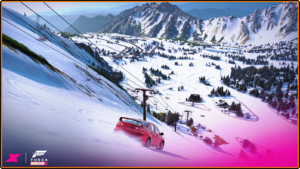
The setting is the biggest reason Forza Horizon 6 feels exciting before the first race even begins. Japan has been one of the most requested Horizon locations for years, and it makes almost too much sense for this series. Tight mountain roads, dense cities, coastal routes, neon streets, rural spaces, car culture, drift history, touge racing, and a visual identity that can shift from calm and scenic to loud and electric within seconds. This is exactly the kind of place the Horizon Festival was built to exaggerate. Playground Games reportedly used deep research, 360-degree photography, video footage, cultural consultation, and help from people connected to Japanese car culture to make the world feel more grounded than a simple postcard version of Japan. That work matters because Forza Horizon has always depended on place. The cars are important, obviously, but the map is what gives the game its mood. Mexico made Forza Horizon 5 feel warm, wide, dusty, and colorful. Japan gives Forza Horizon 6 a sharper rhythm. City roads can feel busy and controlled, mountain roads feel tighter and more technical, and scenic routes give the player space to simply drive without chasing an objective. The best Horizon maps are not just race tracks spread across an open world. They are places where driving slowly can be almost as enjoyable as driving fast. Japan gives the series that again, and it does it with a stronger cultural identity than many open-world racing games manage.
the formula is still almost too good
Forza Horizon 6 does not hide what it is. This is still Horizon: generous, glossy, accessible, fast, loud, and full of things to do. The official Forza page describes the game as a campaign of discovery and Festival racing playable solo or in co-op, where players start as tourists, prove themselves through the Horizon Invitational, earn wristbands, and work toward becoming a Horizon Legend. Steam also lists more than 550 real-world cars, a large Japanese open world, customizable garages, car meets, EventLab, and co-op creative features. That structure works because Forza Horizon understands momentum better than almost any other racing series. It rarely lets the player sit still. One event leads to another. A road discovery leads to a challenge. A skill chain leads to a reward. A new car leads to a tune. A tune leads to another race. The game is extremely good at making progress feel constant, even when the player is not doing anything especially important. This can be a strength and a weakness. On one hand, the game is easy to enjoy because it always gives you something. On the other hand, that constant reward flow can make the experience feel slightly overfed. Nothing is ever quiet for too long. Nothing is allowed to stay simple.
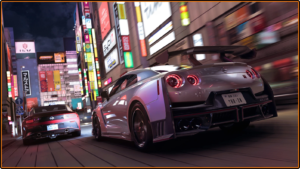
driving still feels like the series’ best argument
The handling remains the main reason the whole thing works. Forza Horizon has never been a strict simulator, but it also does not feel like a pure arcade toy. It sits in that comfortable space where cars have weight, roads have texture, drifting feels stylish, and high-speed mistakes still matter enough to keep the player awake. Forza Horizon 6 continues that balance. The game is accessible, but it is not empty. A casual player can enjoy the festival fantasy, while a more serious player can still care about tuning, car choice, traction, braking, cornering, and the way each vehicle behaves across different surfaces. That is why the series keeps surviving even when the structure becomes familiar. The moment-to-moment driving is still good. Very good. Sometimes that is enough. A racing game can have a massive map, hundreds of cars, online systems, playlists, and seasonal events, but if the cars do not feel good under the player’s hands, the whole thing collapses. Forza Horizon 6 does not have that problem. It still understands the pleasure of speed without making every car feel weightless. It still knows how to turn a simple road into a reason to keep playing.
the car culture angle feels stronger here
Japan gives Forza Horizon 6 a natural car culture identity. This is not just about licensed vehicles or a long car list. It is about the way the setting supports different driving fantasies. Street racing, drift culture, mountain passes, garage culture, car meets, and scenic cruising all feel like they belong here. Steam’s description emphasizes car meets around Japan, customizable garages, and over 550 real-world cars, while PC Gamer’s coverage of barn finds points to 15 hidden vehicles tied to discovery progression, including iconic Japanese and international classics. That gives the game a stronger collector identity. Finding, tuning, displaying, and driving cars is not just a menu loop. It feels more tied to the world. The best parts of Horizon happen when car enthusiasm and map design work together, and Japan gives the series a lot of room to do that. The game does not need to explain why a mountain road is exciting. The road itself explains it. It does not need to force car culture into the world. The setting already carries it.

beautiful, but not always surprising
Forza Horizon 6 is visually stunning in the expected way. That phrase matters: expected. Playground Games has been making some of the best-looking racing games for years, so the surprise is no longer simply that the game looks good. Of course it looks good. Roads are slick, landscapes are detailed, lighting is rich, cars are beautifully modeled, and the environment often looks built for screenshots. Japan gives the art team more contrast than ever: neon cities, quiet shrines, rural roads, mountains, water, dense streets, and festival chaos all pushing against each other. The graphics are excellent, but the visual achievement feels like refinement more than shock. That is not a criticism exactly. A game this polished deserves credit for looking this good across such a large open world. But the Horizon series has trained players to expect beauty, and Forza Horizon 6 meets that expectation rather than completely redefining it. The bigger visual win is not raw detail. It is atmosphere. Japan gives the game texture, and the art direction uses that texture well.
content is huge, maybe too huge
One of the strangest strengths of Forza Horizon 6 is that it can feel almost impossible to exhaust. Races, story content, challenges, collectibles, car discovery, online play, user-generated events, garages, upgrades, seasonal structure, and exploration all stack on top of each other. For many players, that is exactly the point. The game becomes a long-term racing platform rather than something to “finish” in a weekend. Review coverage has repeatedly praised the game’s content density, large map, and polished open-world structure, with GamesRadar noting that critics see it as one of the most polished entries in the franchise even if it does not revolutionize the series. But size can also dull impact. When everything gives rewards, rewards begin to feel less special. When every road has something nearby, discovery can become less surprising. When every few minutes unlocks another notification, car, badge, event, or progression marker, the game sometimes feels more like a beautifully tuned machine than a true adventure. That is the Horizon paradox. It is generous to the point of exhaustion. Forza Horizon 6 is better than most games at managing that overload, but it still cannot fully escape it.
the familiarity problem is real
The biggest reason this review stops at 87 instead of moving closer to the Metacritic average is familiarity. Forza Horizon 6 is extremely good at being Forza Horizon. It is not as strong at making the series feel newly dangerous. Japan helps a lot, but the core experience remains very close to what players already know: festival progression, event types, open-world driving, massive car collection, skill chains, multiplayer hooks, and seasonal/live content. If someone loved Forza Horizon 4 and 5, that may sound perfect. If someone wanted the series to take a more dramatic design risk, the game may feel safer than expected. That does not make it lazy. The polish is too high for that. The map work, car list, content volume, and driving feel all show serious craft. But the emotional shape of the game is familiar. The player knows what kind of ride this is after the first hour. Forza Horizon 6 adds a wonderful setting and many refined systems, but it does not really challenge the idea of what Horizon can be. It perfects more than it disrupts.
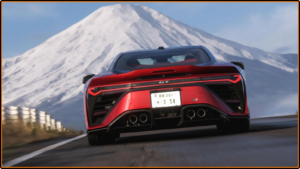
pc and platform context
The PC version is especially important because Forza Horizon has become one of the most mainstream racing franchises left on PC. Steam lists the game for PC with a May 18, 2026 release date, Playground Games as developer, Xbox Game Studios as publisher, and a “Very Positive” user review rating from thousands of early reviews. That kind of early response matters. Critics love the game, but the PC audience is often less forgiving when performance, DRM, or technical issues get in the way. Windows Central also reported that the Steam listing does not indicate Denuvo and that Xbox confirmed Denuvo is not included, which is a useful note for PC players worried about performance-heavy DRM. There was also a major pre-release leak situation, with The Verge reporting that a full version leaked and was cracked before official launch, and that Playground Games responded with strong enforcement warnings. That controversy does not change the quality of the game, but it does show how huge the anticipation was. Forza Horizon 6 did not arrive quietly. It arrived as one of Xbox’s biggest releases of the year, with critical praise, massive interest, and the usual modern launch noise around access, versions, and platform timing.
why 87 makes sense
An 87 score may look low next to the 92-level critical average, but pcdoors scoring is not only about counting praise. It is about how the game feels as a complete recommendation. Forza Horizon 6 is excellent. The driving is strong, Japan is the right setting, the game looks beautiful, the car culture angle works, the content is enormous, and the polish is difficult to deny. It deserves a high score because very few racing games offer this level of production, accessibility, and long-term playability. At the same time, the formula is starting to show its shape too clearly. This is not a racing revolution. It is a superb continuation. That distinction matters. Forza Horizon 6 gives players one of the best open-world racing packages available, but it does not fully escape the feeling that Playground Games is refining a machine it already built years ago. The result is still fantastic, but not untouchable. 87/100 reflects that balance: a brilliant racing game, a stunning Horizon entry, and a Japan-set festival that delivers almost everything expected just not enough surprise to reach the very top of the scale.