REVIEW | PRAGMATA | CONTROLLED, ATMOSPHERIC, AND MOSTLY WORTH IT
Pragmata opens without urgency, without noise, and without the usual need to impress in the first few minutes. There’s no rush to throw mechanics at you or to prove its scale immediately. Instead, it establishes a tone and lets that tone carry the experience forward. That approach defines everything that follows. It can feel distant at first, even slightly cold, but it’s deliberate. The game is asking for patience from the beginning, and whether that works for you depends entirely on how willing you are to meet it halfway. On PC, that slower approach benefits from stability and clarity, allowing the design to come through without technical distractions, which ends up being more important here than in most modern releases.

a gameplay structure built on control, not urgency
Pragmata doesn’t follow the usual rhythm of contemporary action games. There’s no constant push forward driven by spectacle or fast progression systems. Instead, the game slows things down and builds its structure around awareness and control. Movement feels measured, interactions feel intentional, and timing becomes more important than speed. You’re not reacting instinctively to what’s happening on screen. You’re observing, understanding, and then acting. That shift in approach changes how the entire experience feels. It demands attention, not reflex. This design creates a sense of precision that becomes more satisfying the longer you play. Once the mechanics settle in, there’s a rhythm to everything. You begin to anticipate situations rather than simply react to them, and that anticipation becomes the core of the experience. However, that same structure can also work against the game at times. Because it relies heavily on consistency, it doesn’t always introduce new ideas quickly enough. There are moments where the gameplay feels like it’s repeating itself without adding enough variation to justify the length of certain sections. The systems are solid, but they don’t always evolve at the pace they should.
encounters that demand awareness over aggression
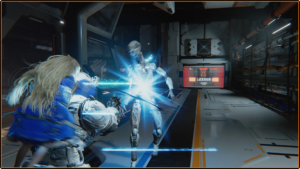
Encounters in Pragmata are not built around chaos or overwhelming force. They’re controlled, almost calculated scenarios where positioning and timing matter more than raw input speed. The game rarely asks you to dominate a situation through aggression. Instead, it asks you to manage it carefully. This creates a different kind of tension. It’s quieter, more focused, and often more demanding than traditional combat systems. When everything aligns, the experience feels precise and rewarding. You understand the logic behind each encounter, you recognize patterns, and you respond with intention. There’s a sense of control that becomes increasingly satisfying as you progress. But this design has its limits. Because encounters follow a consistent structure, they can start to feel predictable. The game doesn’t always introduce enough variation to keep every moment fresh, and that becomes noticeable in longer sessions. Still, the foundation remains strong. The mechanics don’t break, they don’t contradict themselves, and they don’t rely on randomness. That consistency is one of the game’s biggest strengths, even if it occasionally leads to repetition.
atmosphere that carries the experience
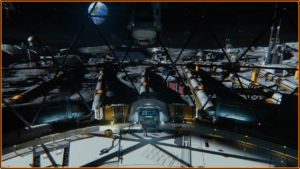
The atmosphere in Pragmata is one of its defining features. It doesn’t rely on constant visual spectacle or overwhelming detail. Instead, it builds a consistent mood through restraint. Environments feel controlled, sometimes even sterile, but never empty without purpose. There’s a sense of isolation that runs through the entire game, shaping how you interact with the world. On PC, this atmosphere is supported by stable performance and clean presentation. The game looks sharp without trying too hard. Lighting is balanced, textures are clear, and there’s a consistency in how everything is presented. It’s not a game that aims to impress through raw graphical power. It focuses on clarity and tone instead. The way space is used is particularly effective. Environments are not just backgrounds. They guide movement, influence decisions, and reinforce the overall mood. There’s a quiet tension in the design, and it holds the experience together even when the gameplay slows down.
storytelling that leaves room for interpretation
The narrative follows the same restrained approach as the gameplay. It doesn’t rely on long cutscenes or heavy exposition. Instead, it presents fragments of information and expects you to piece them together. This creates a sense of curiosity that drives the experience forward. You’re not just moving through the game. You’re trying to understand it. There’s a consistent sense of mystery that remains even as the story progresses. It doesn’t rush to explain everything, and it doesn’t feel the need to resolve every thread. That approach works, but only up to a point. There are moments where the story feels too reserved, where it holds back more than it should. Some elements could have been explored more deeply, and some answers feel just out of reach. Despite that, the tone remains strong. The narrative, the environment, and the pacing all support each other. Even when the story doesn’t fully deliver, it never feels disconnected from the rest of the experience.
pc performance that supports the design
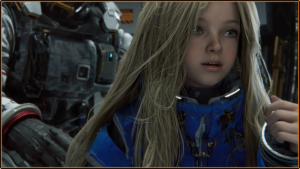
Technically, the PC version delivers exactly what it needs to. Performance is stable, frame rates remain consistent, and there are enough graphical options to adapt the experience to different hardware configurations. It doesn’t feel like a rushed port. Instead, it feels like a version that was designed to run properly. Controls are responsive and reliable. There’s no noticeable delay, and inputs feel precise. That’s essential in a game where timing and control are central to the experience. Whether you’re using a controller or mouse and keyboard, the responsiveness remains consistent. Loading times are short, transitions are smooth, and there are no major technical issues that disrupt immersion. These details might not stand out individually, but together they support the overall experience in a way that makes a difference.
pacing issues that limit the experience
The biggest issue Pragmata faces is pacing. The slow, deliberate approach works well at the beginning, where everything feels new and engaging. But as the game progresses, it doesn’t always introduce enough new ideas to maintain that level of engagement. Certain sections feel stretched, and the lack of variation becomes more noticeable. This doesn’t break the experience, but it does affect its overall flow. What starts as a strength gradually turns into a limitation. The same controlled rhythm that makes the opening hours feel focused and intentional begins to lose some of its impact once the game settles into repetition. You still understand what it’s trying to do, and in many ways you still respect that approach, but you also start to feel the absence of stronger progression. Instead of building momentum, the game sometimes circles back to familiar patterns without pushing them further. There are moments where it feels like the experience is holding itself back, not because it lacks ideas, but because it chooses not to expand on them quickly enough. The mechanics are solid, the structure is clear, but the sense of growth becomes less noticeable over time. This creates small dips in engagement, especially in longer play sessions where the pacing doesn’t quite match the player’s expectations anymore. With tighter sequencing and more consistent introduction of new variations, these sections could have carried much more weight. As it stands, the pacing doesn’t collapse, but it never fully stabilizes either. It remains slightly uneven, just enough to remind you that the game could have been sharper without losing its identity.
a consistent vision with minor flaws
Pragmata stands out because it commits to its identity. It doesn’t try to appeal to everyone, and it doesn’t change its approach to fit expectations. It builds its experience around control, atmosphere, and consistency, and it stays focused on that vision. That focus comes with trade-offs. It limits variety, it slows pacing, and it leaves some aspects underdeveloped. But it also gives the game a sense of purpose that many titles lack. What makes that commitment interesting is how rarely the game breaks its own rules. Even when certain ideas don’t land as strongly as they could, Pragmata doesn’t suddenly shift direction or try to compensate with something louder or more conventional. It stays measured, almost stubbornly so, and that gives the entire experience a kind of coherence that’s easy to notice once you’re a few hours in. You always know what the game is trying to do, even if you don’t always agree with how it does it. There’s also a certain confidence in how it handles its weaker moments. Instead of masking them with distractions, it lets them sit there, part of the experience. That won’t work for everyone, but it reinforces the idea that the game is built around a clear intention rather than a checklist of features. It feels designed, not assembled, and that difference becomes more apparent the longer you spend with it.At the same time, those trade-offs never fully disappear. The slower pacing, the occasional lack of variation, and the restrained storytelling all leave small gaps that keep the game from reaching a higher level. They don’t undermine the experience, but they do hold it back just enough to be noticeable.A score of 87 reflects that balance. It’s a strong, memorable experience with clear strengths and equally clear limitations. It doesn’t reach perfection, but it doesn’t try to hide that either. Instead, it delivers something focused, different, and confident enough to stand on its own without needing to follow the usual formula.
REVIEW | RESIDENT EVIL REQUIEM | CAPCOM’S MOST PLISHED HORROR YET
Some games leave a mark on you long after you put the controller down. They remind you why you fell in love with gaming in the first place. For me, survival horror has always belonged to that category. I grew up mostly on RPGs sprawling worlds, slow character building, the comfort of long journeys and deep systems. That’s still my home genre and probably always will be. But something changed in the last few years. Lately I’ve realized that alongside RPGs, the games that excite me the most are those focused, atmospheric third-person experiences. Titles like Resident Evil, Dead Space, and Silent Hill. Games that don’t waste your time. Games that know exactly what they want to be and then push every system in that direction: tension, atmosphere, survival. That’s the space where Resident Evil Requiem enters. And after spending a good amount of time with the game watching gameplay, digging into impressions, reading what other players and critics are saying I can say this much with confidence: Requiem feels like a game that understands what survival horror is supposed to do to a player. It doesn’t simply scare you. It unsettles you.
A Series That Refuses to Stay Dead
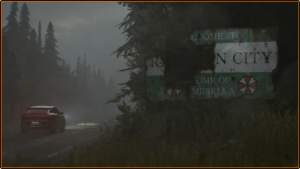
The Resident Evil series has gone through more reinventions than almost any other franchise in gaming. We’ve seen fixed camera angles, over-the-shoulder action, full-blown co-op shooters, and then a return to slower horror again. Somehow the series keeps reinventing itself without losing its identity. That identity has always been about tension. Not just monsters jumping out of the dark, but the slow creeping dread of exploring a place that doesn’t want you there. Requiem continues that tradition, but it does something interesting. Instead of trying to revolutionize the formula again, it leans into refinement. The game clearly builds on the technological and design foundations Capcom has developed over the last few entries. You can feel that lineage immediately when the game begins. Movement feels deliberate. Environments are packed with detail. Lighting does a huge amount of storytelling work. Capcom’s RE Engine has become one of the most impressive internal engines in the industry, and Requiem shows why. The level of environmental atmosphere alone carries a lot of the experience. Rusted metal, decaying interiors, flickering lights, fog-soaked outdoor areas it all looks uncomfortably real. The result is a world that feels oppressive in a very specific way. Not exaggerated horror, but the kind that makes you pause before opening a door. And in survival horror, that moment of hesitation is everything.
The Return of Slow, Methodical Fear
One thing that becomes clear very quickly is that Requiem doesn’t try to overwhelm the player with constant combat. Instead, it builds tension slowly. You spend a lot of time exploring environments, listening for distant sounds, managing limited resources, and trying to figure out whether the hallway ahead of you is safe or not. This is something I’ve always loved about Resident Evil when it’s at its best. A lot of modern games throw enemies at you constantly. The logic is simple: more action equals more excitement. But survival horror works differently. The fewer enemies you face, the more dangerous each encounter becomes. Requiem understands that. You never feel completely safe. Even when nothing is happening, the game manages to keep your nerves slightly on edge. It’s the small details that do the work here: distant footsteps, subtle environmental noises, the way shadows shift as you move. And when combat finally happens, it feels meaningful. Every bullet matters. Every encounter forces you to think. Do you fight? Do you run? Do you conserve ammo for something worse that might be waiting ahead? These decisions are where the game’s tension really lives.
A World That Feels Hostile
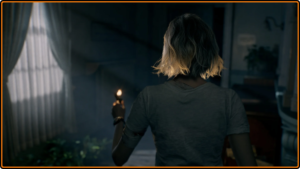
The environments in Requiem deserve special attention because they do much more than just look good. They play a critical role in shaping the player’s emotional experience. Some locations feel claustrophobic and suffocating. Tight corridors, narrow staircases, rooms that feel like they’re closing in on you. Other areas open up slightly, but never enough to feel safe. What I appreciate most is how the game uses environmental storytelling. Instead of constantly explaining what happened, the world itself provides clues. Broken furniture, abandoned equipment, strange markings, signs of violence or desperation. You piece together fragments of the story just by looking around. This is something the best survival horror games have always done well. The world feels lived in. And also destroyed.
Combat That Rewards Patience
Combat in Requiem leans heavily into precision and timing. It’s not about spraying bullets everywhere. It’s about carefully choosing when to attack and when to retreat. The third-person camera works extremely well for this style of gameplay. You always feel connected to your character’s movement and positioning, which is essential when enemies are dangerous enough to punish mistakes. Weapons feel impactful. Every shot carries weight. Reloading animations are detailed and sometimes nerve-wracking when enemies are closing in. But the real strength of the combat system is how it integrates with resource management. You never feel overpowered for long. Ammunition and healing items are limited enough that you constantly have to think ahead. And that tension never really goes away.
Horror That Relies on Atmosphere
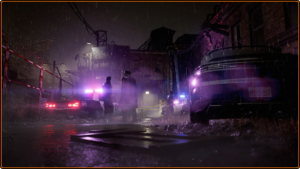
One of the most important ingredients of effective horror is pacing. Fear is a strange psychological mechanism: if you trigger it too often, the brain adapts. The shock loses its bite. What once felt terrifying slowly turns into routine. Good horror understands this and deliberately avoids overwhelming the player with constant intensity. Resident Evil Requiem appears to understand that principle very well. Instead of trying to scare the player every thirty seconds, it takes its time. The game allows tension to grow gradually, quietly, almost invisibly. A large part of that tension comes from the simple act of exploration. Long corridors stretch ahead with no immediate threats. Rooms sit silent and abandoned. You move carefully through spaces that feel like something should happen at any moment, yet nothing actually does. Those stretches of stillness create a subtle psychological pressure that builds with every step. In many ways the emptiness becomes part of the horror. When a hallway feels too quiet, your brain begins filling in possibilities. Maybe something is watching from the darkness. Maybe something moved behind you without you noticing. Maybe the next door you open will finally break that silence in the worst possible way. Requiem seems to rely heavily on that feeling of anticipation. Lighting again plays a major role here. Certain rooms appear normal at first glance, but something about them feels slightly wrong. Shadows stretch in unnatural ways. Corners remain darker than they should be. Sometimes the player cannot immediately identify why a space feels uncomfortable. The unease simply settles in slowly. That kind of discomfort is far more effective than obvious horror tricks. The player begins to question the environment itself. Environmental storytelling also contributes to the atmosphere. Broken objects, abandoned equipment, scattered documents and subtle visual clues suggest that something terrible happened long before the player arrived. The game rarely explains everything directly. Instead it allows the environment to hint at the story. This approach strengthens immersion because the player becomes an active observer rather than a passive audience. Another important element is restraint. The game does not constantly bombard the player with enemies or scripted events. Encounters appear carefully spaced out, allowing the tension from previous moments to linger. When something finally does happen, it feels earned rather than forced. That restraint keeps the player alert. Every new sound or movement becomes meaningful because the game hasn’t trained you to ignore them. Of course, Requiem still uses moments designed to shock the player. Sudden attacks, unexpected enemy appearances, or violent environmental events are part of the survival horror formula. But these moments work precisely because they arrive after long stretches of psychological pressure. The player spends minutes walking through quiet spaces, slowly building anxiety. Then, when the game finally decides to break that silence, the impact is far stronger. It’s a rhythm that feels deliberate. Calm exploration. Growing tension. Sudden disruption. Then silence again. This kind of pacing is difficult to achieve. Many horror games struggle because they either lean too heavily on constant action or rely on cheap jump scares that lose their effectiveness after the third or fourth repetition. Requiem appears to avoid those pitfalls by focusing on atmosphere first. Fear comes from the environment, the sound design, the lighting, and the uncertainty of what might be waiting around the next corner. In other words, the game understands a simple but powerful truth about horror: sometimes the scariest thing is not what you see, but what you expect might appear.
A Personal Perspective
I’ll admit something here: I didn’t actually sit down and play through Requiem myself yet. But I’ve watched enough gameplay, read enough impressions, and followed the reactions closely enough to form a pretty clear picture of what Capcom built here. And maybe that distance actually helped me see something interesting. As someone who has always been primarily an RPG player, I’ve noticed that my gaming habits have slowly changed over time. I still love long RPG adventures, but in between those massive experiences I increasingly find myself drawn toward focused third-person games. Games that respect the player’s time. Games that deliver atmosphere, tension, and strong design without trying to stretch themselves into 100-hour epics. Resident Evil, Dead Space, Silent Hill they all share that DNA. Requiem fits comfortably into that space. And honestly, it’s the kind of game I’ve been wanting more of lately.
Technical Performance and Presentation
From a technical standpoint, Requiem appears remarkably polished. The RE Engine once again demonstrates why Capcom has become one of the most technically reliable developers in modern gaming. Over the past few years this engine has quietly matured into a powerhouse capable of delivering highly detailed environments, realistic lighting, and impressive performance without the technical instability that often follows visually ambitious games. Requiem continues that tradition with confidence. Character models strike a careful balance between realism and clarity. Faces are expressive without drifting into uncanny territory, while character animations feel grounded and believable during both exploration and combat. Small movements shifting posture, breathing patterns, subtle reactions to nearby threats help characters feel physically present in the world rather than like static game objects. Lighting does much of the storytelling here. The way shadows stretch across corridors, the flicker of broken fluorescent lights, and the way distant rooms disappear into darkness all play a major role in shaping the player’s emotional experience. Rather than relying on exaggerated visual effects, the game uses lighting to create a sense of unease that constantly lingers in the background. It’s subtle, but incredibly effective. Environmental detail is another area where the game shines. Surfaces carry signs of decay and age. Dust particles drift slowly through the air in dimly lit spaces. Reflections ripple faintly across wet floors or metallic surfaces. These elements might seem minor individually, but together they create environments that feel layered and tangible. Particle effects also deserve mention. Sparks, smoke, debris, and environmental reactions all behave in ways that feel convincing without becoming visually overwhelming. When something breaks or collapses in the environment, it carries a physical weight that reinforces the realism of the space. Performance appears stable across platforms based on early reports and gameplay footage. Frame rates remain smooth even in more intense moments, which is particularly important for a survival horror game. Combat encounters rely heavily on precise movement and timing, and any technical instability would immediately break immersion. Fortunately, that doesn’t seem to be the case here. Loading times also appear well managed. Transitions between areas are quick enough that they rarely interrupt the pacing of exploration. This is important because survival horror thrives on momentum the tension built while moving through an environment should never be lost to technical delays. Sound design might be the most impressive technical achievement in the entire package. Requiem uses audio with incredible precision. The game understands that silence can be just as powerful as music, sometimes even more so. Instead of constantly pushing a dramatic soundtrack, the audio design allows quiet moments to dominate the atmosphere. Environmental sounds often carry more emotional weight than traditional music cues. You hear distant metallic creaks echoing through hallways. Air vents hum softly somewhere behind the walls. Footsteps shift across surfaces in ways that make you question whether something else might be moving nearby. Sometimes it’s barely audible details that make the biggest impact. A faint breath. A distant thud. The quiet scraping of something across the floor far outside your immediate view. Moments like that trigger the player’s imagination, and imagination is often far more powerful than anything the game can show directly. Even the soundtrack itself is used carefully. When music does appear, it tends to emphasize key moments rather than dominate the entire experience. This restraint helps preserve the game’s oppressive atmosphere and keeps players focused on the environment around them. Taken together, these technical elements create an experience that feels cohesive and carefully constructed. Nothing feels excessive or out of place. Every visual and audio component seems designed to support the same goal: maintaining tension and immersion from beginning to end. It’s the kind of technical polish that doesn’t demand attention but quietly supports every moment of the experience. And in a survival horror game, that kind of invisible craftsmanship can make all the difference.

Why Resident Evil Still Matters
Survival horror has always had an interesting relationship with the rest of the gaming industry. It’s a genre that periodically disappears and then comes back stronger. For a while, many developers believed that horror games had to become action games in order to survive. More explosions, more enemies, bigger set pieces. But the recent resurgence of survival horror proves something important: players still want tension. They still want atmosphere. They still want games that make them feel vulnerable. Resident Evil has been at the center of that evolution. Requiem doesn’t feel like a radical reinvention of the series. Instead, it feels like the series confidently continuing the direction it rediscovered in recent years. And that might actually be the smartest possible decision.
REVIEW | REANIMAL | PSYCHOLOGICAL HORROR DRIVEN BY MOOD & ISOLATION
Reanimal doesn’t throw horror at you from the dark. It doesn’t scream for attention, and it doesn’t rush to prove how disturbing it can be. It waits. It settles into the walls, into the air, into the silence between your footsteps. From the first minutes, it feels less like a game trying to scare you and more like a place that quietly resents your presence. You’re not meant to be here, and the world makes that clear without ever spelling it out. Doors creak with the weight of old decisions, corridors feel too narrow for comfort, and every sound carries the faint suggestion that something else is listening. Reanimal doesn’t hurry you. It lets the atmosphere do the slow, patient work of getting under your skin. This is a horror experience that understands restraint. It doesn’t rely on constant shock tactics or loud set pieces. Instead, it builds a mood that clings to you long after you’ve put the controller down. The environments feel deliberately designed to be uncomfortable, not because they’re filled with monsters at every turn, but because they feel abandoned in the wrong way. There’s a sense that something once lived here, suffered here, and never truly left. The game is at its strongest when you’re alone with that feeling, moving forward not because you want to, but because standing still feels even worse.

A World That Breathes in Silence
Reanimal’s environments are the backbone of its identity. Every location feels like it has a memory it doesn’t want to share, yet it leaks through the cracks in the walls and the flicker of broken lights. The visual design leans into decay, but not in an over-the-top way. This isn’t the kind of horror that splashes gore across every surface. It’s more restrained, more suggestive. Rusted metal, damp concrete, peeling paint, and rooms that feel like they’ve been empty for far too long. The spaces feel lived-in, then abandoned, then left to rot. That progression matters because it creates the feeling that you’re walking through the aftermath of something deeply wrong rather than a theme park built to scare you. Lighting plays a huge role here. Shadows aren’t just darkness; they feel thick, like they carry weight. Sometimes you’ll see movement that might be nothing more than your own reflection or the trick of a flickering bulb. Other times, the game makes you question whether what you saw was real at all. Reanimal uses light sparingly, often forcing you to navigate half-seen spaces where your imagination fills in the worst possibilities. The environments don’t scream danger. They whisper it, and that whisper is often more effective. What really sells the atmosphere is the sound design. The audio landscape in Reanimal is carefully layered, with distant creaks, muffled thumps, and low ambient tones that never quite let you relax. Silence is used as a tool, not as empty space. When the game goes quiet, it feels intentional, like the world is holding its breath along with you. Footsteps echo in a way that makes you feel small, and subtle environmental sounds hint at movement beyond your field of view. Even when nothing is happening, it feels like something could happen at any moment, and that tension becomes part of the experience.
Storytelling Through Unease
Reanimal doesn’t rely on heavy exposition or constant narrative dumps. Instead, it tells its story through the spaces you move through and the small details scattered across them. Notes, environmental clues, and fragmented hints paint a picture of what happened here without ever giving you the full story outright. This approach works well because it mirrors the emotional tone of the game. You’re not meant to fully understand everything. You’re meant to piece together fragments and live with the discomfort of not knowing the whole truth. The narrative that emerges feels personal and grounded in trauma, loss, and the aftermath of human decisions. There’s a quiet sadness running beneath the horror, a sense that whatever horrors exist in this world are not just monsters but reflections of deeper, more human pain. The game doesn’t romanticize that suffering. It presents it in a raw, uncomfortable way that makes the environments feel like echoes of emotional wounds rather than just spooky locations. What stands out is how the story respects the player’s intelligence. It doesn’t over-explain its themes or motivations. Instead, it trusts you to connect the dots. That trust adds to the immersion because you’re actively engaging with the world, not just consuming a pre-packaged narrative. The result is a story that lingers in your mind, not because of dramatic cutscenes, but because of the quiet moments where you realize what might have happened here.
Solo Experience as the Core of the Game
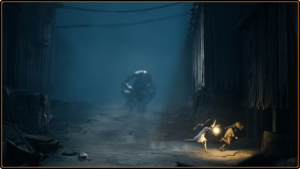
While Reanimal offers cooperative elements, the heart of the experience is undeniably the solo journey. Playing alone amplifies everything the game does well. The isolation becomes part of the horror, and the atmosphere feels heavier when there’s no one else to share the tension with. In solo play, every sound feels more threatening, every shadow more suspicious. There’s no safety net, no reassuring presence. It’s just you and the environment, and that’s where the game feels most honest. The pacing of solo play is carefully tuned to keep you on edge without overwhelming you. There are moments of relative calm where you can explore and take in the details, followed by stretches of heightened tension that test your nerves. This rhythm keeps the experience engaging without turning it into a constant barrage of scares. The fear in Reanimal comes from anticipation as much as from confrontation, and solo play leans into that beautifully. Emotionally, the solo experience feels more personal. The themes of isolation and vulnerability resonate more strongly when you’re navigating the world alone. You’re not just a player moving through a level; you feel like a presence intruding on a place that doesn’t want to be disturbed. That feeling of being unwelcome, of being watched by a world that remembers its pain, is central to Reanimal’s identity, and it lands best when you’re alone with it.
Mechanics That Stay Out of the Way
Reanimal’s gameplay mechanics are deliberately restrained. The game doesn’t try to reinvent the wheel or overwhelm you with complex systems. Movement feels grounded and slightly weighty, which adds to the sense of vulnerability. You’re not sprinting through environments like an action hero. You move carefully, deliberately, often hesitating before stepping into the unknown. That slower pace reinforces the horror because it forces you to commit to every decision. Interaction with the environment is simple but effective. You’re encouraged to explore, to examine objects, and to piece together clues, but the game doesn’t turn this into a tedious scavenger hunt. Puzzles are integrated into the environment in a way that feels natural, often requiring you to pay attention to subtle details rather than follow obvious markers. This design choice keeps you engaged with the world itself rather than pulling you out of the experience with artificial mechanics. Combat, where present, is not the focus. Reanimal doesn’t empower you with a large arsenal or encourage aggressive play. Encounters feel tense and often avoidable, reinforcing the idea that survival is about awareness and caution rather than brute force. This approach keeps the tone consistent with the game’s atmospheric goals. You’re not meant to dominate this world. You’re meant to survive it, and sometimes just barely.
The Emotional Weight of Atmosphere
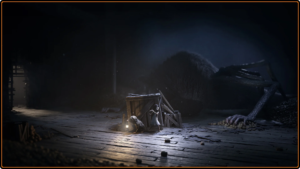
Atmosphere is not just a visual or auditory element in Reanimal. It’s the emotional backbone of the entire experience. The game understands that true horror often comes from mood rather than spectacle. The feeling of walking through a space that carries emotional residue, of sensing that something terrible happened here without being told exactly what, creates a lingering unease that sticks with you. This is where Reanimal truly shines. The environments don’t just look unsettling; they feel heavy. There’s a sense of emotional density to the world, as if every room is layered with memory and regret. That weight makes even simple exploration feel significant. You’re not just moving from point A to point B. You’re traversing a space that feels haunted by its past. This emotional texture gives the game a unique identity among horror titles, setting it apart from experiences that rely more heavily on shock value. Moments of quiet reflection are particularly effective. Sometimes you’ll find yourself standing in a room, listening to the ambient sound, taking in the small details of decay and neglect. These moments aren’t filled with action, but they’re filled with meaning. They give you space to absorb the atmosphere and let the tension sink in. In a genre that often prioritizes constant stimulation, Reanimal’s willingness to slow down feels refreshing and confident.
Technical Performance and Presentation
From a technical standpoint, Reanimal presents itself competently, with strong art direction and consistent performance. The visual style is cohesive, favoring moody lighting and detailed environments over flashy effects. Textures and environmental details hold up well, contributing to the believability of the world. The character models, while not the central focus, fit the tone of the game and don’t distract from the atmosphere. Performance is generally stable, and the game runs smoothly across supported platforms. Minor technical hiccups may appear, as with most releases, but nothing that fundamentally breaks the experience. Load times are reasonable, and transitions between areas feel seamless enough to maintain immersion. The interface stays out of the way, presenting only what’s necessary and avoiding clutter that could break the mood. The audio presentation deserves special mention. The sound design is one of the strongest aspects of Reanimal, with careful attention paid to environmental audio and subtle cues that enhance tension. Music is used sparingly, often giving way to ambient soundscapes that feel more organic and unsettling. When music does appear, it’s understated, reinforcing emotional beats rather than overwhelming them.
Co-op as a Secondary Option
Although cooperative play is available, it feels more like an optional layer than the intended core experience. Playing with another person can change the tone of the game significantly. The presence of a second player naturally reduces the sense of isolation, which is such a central part of Reanimal’s identity. While co-op can be enjoyable in its own way, it slightly dilutes the emotional weight and tension that make the solo experience so powerful. That doesn’t mean co-op is poorly implemented. It functions well enough and offers a different way to experience the world, especially for players who prefer shared experiences. However, the atmosphere and pacing feel more carefully tuned for solo play. The game’s design choices, from environmental storytelling to sound design, seem built around the idea of a lone player navigating an oppressive space. Co-op works, but it feels like an alternative flavor rather than the main dish.

Final Thoughts on the Experience
Reanimal is not a game that tries to impress with bombast or spectacle. Its strength lies in its patience, its restraint, and its commitment to atmosphere. The solo experience, in particular, stands out as a carefully crafted journey into isolation and unease. The world feels heavy with unspoken stories, and the game trusts you to sit with that weight rather than rushing you through it. The mechanics support the mood without getting in the way, and the storytelling respects your ability to engage with subtlety. Reanimal doesn’t aim to be the loudest or most shocking horror experience. It aims to be the one that lingers in your thoughts after you’ve turned the game off. In that, it succeeds. The atmosphere is the game’s greatest strength, and it’s woven into every aspect of the experience, from visual design to sound to pacing. If you’re looking for a horror game that values mood over spectacle and solitude over constant action, Reanimal delivers a memorable, unsettling journey. It’s not perfect, and some players may wish for more variety in mechanics or more explicit narrative beats. But for those willing to sink into its slow-burn horror, it offers an experience that feels cohesive, thoughtful, and emotionally resonant. Taken as a whole, Reanimal comfortably earns its 85 rating, carried by atmosphere and a strong solo experience.


