TERRA INVICTA: DARK SKIES | TWO HISTORIES, ONE INVASION
An alien invasion does not need to change for the entire war to become unfamiliar. Change the Earth waiting beneath it, move the opening decades backward or shatter civilization long before the first extraterrestrial probe appears, and every political alliance, research priority and journey into space develops under different pressure. Terra Invicta: Dark Skies, the first major DLC for Pavonis Interactive’s grand-strategy invasion simulator, is now available on PC with two alternate starting scenarios designed to transform the conditions under which humanity confronts its approaching enemy. One sends players back to 2003, placing the shadow war against the aliens inside the diplomatic turmoil surrounding the US-led invasion of Iraq. The other imagines a twentieth century in which the Cuban Missile Crisis escalated into nuclear war, leaving a fragmented and weakened Earth to face the extraterrestrial threat more than a century later. Dark Skies does not introduce a different alien species or abandon the Solar System-scale struggle of the original game. Instead, it changes the human world from which that struggle begins, testing whether Terra Invicta’s unusually detailed political and technological systems can support two fundamentally different versions of history. The DLC launched on July 27, 2026, for the Steam and Epic Games Store versions of the base game.
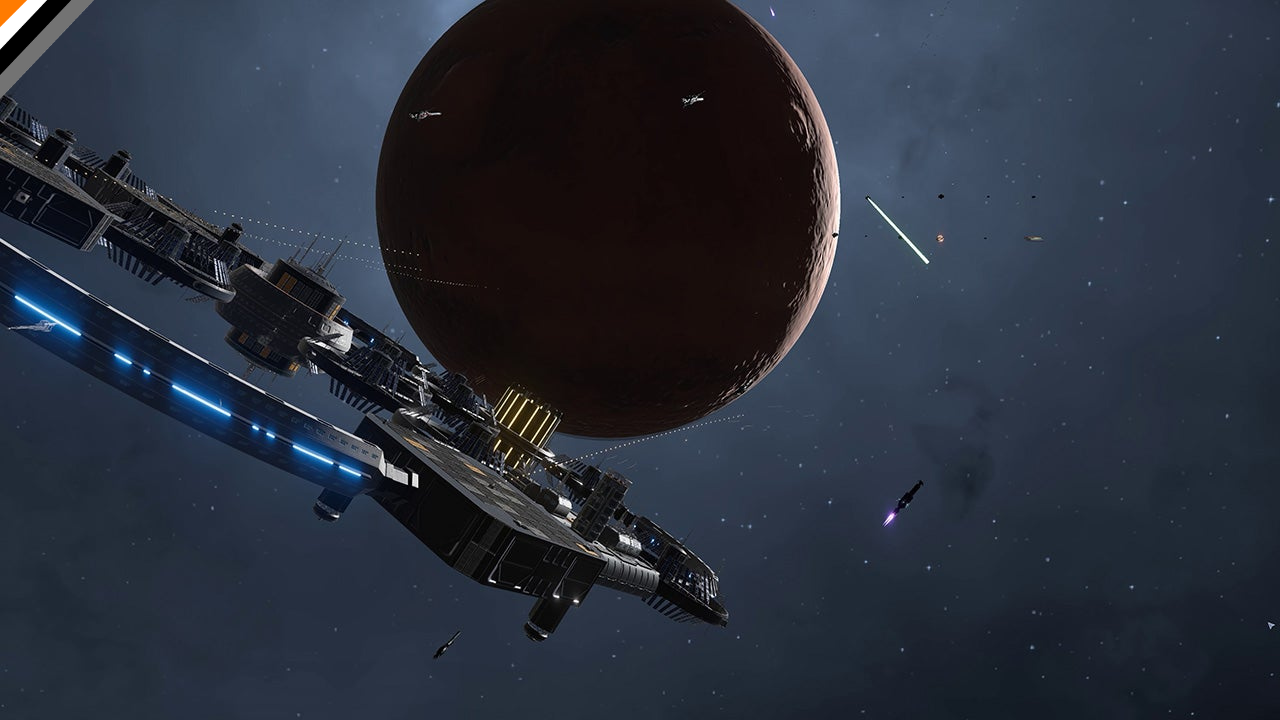
two new roads into the same war
Terra Invicta normally begins with modern Earth reacting to evidence that an alien force has entered the Solar System. Seven ideological organizations compete to control nations, direct research, influence public opinion and determine whether humanity should resist, cooperate, surrender, profit or escape. The political struggle gradually expands beyond Earth as factions establish orbital stations, mine asteroids, colonize planets and design fleets capable of confronting both human rivals and extraterrestrial warships. Dark Skies keeps that central structure but changes the historical foundation beneath it. This is more significant than simply replacing a starting date or moving national borders. Terra Invicta models political influence, economic development, military power, public opinion, scientific research and access to space infrastructure across individual regions. Altering the condition of Earth therefore changes which countries can support a faction, how quickly humanity can reach space and whether the planet enters the invasion as a relatively stable industrial civilization or a collection of states still recovering from catastrophe. The DLC’s two scenarios approach that idea from opposite directions. The 2003 setting gives humanity additional time, but places the early conflict inside a period of geopolitical tension when few people understand that a larger war has already begun. Broken Earth moves in the other direction: the alien arrival comes to a civilization that has already endured the disaster it once feared most. One scenario extends preparation. The other removes much of the strength humanity would normally use to prepare. This makes Dark Skies an expansion focused less on adding isolated units and more on changing the strategic context of an entire campaign. The aliens remain the long-term existential threat, but the route toward confronting them must be rebuilt around a different Earth.

the 2003 scenario starts the shadow war early
The first scenario places the player in 2003, during the US-led invasion of Iraq. Earth’s governments are divided by military intervention, shifting alliances and diplomatic instability, while the alien presence remains largely hidden from the public. New technologies and faction projects accompany the earlier start, while alien sympathizers are positioned to interfere with organizations attempting to prepare humanity for what is coming. The most obvious advantage is time. Starting roughly twenty years earlier creates a longer terrestrial phase before humanity begins its rapid expansion into the Solar System. That additional period can be used to build political influence, direct national investment, strengthen research and shape the international order before the extraterrestrial threat becomes impossible to ignore. More time does not automatically mean an easier campaign. An earlier start also means working with older technology, less developed launch infrastructure and a political environment focused on conflicts that appear far more immediate than distant alien activity. The player may understand the scale of the coming invasion, but governments and populations do not. Winning the first stage of the war therefore means building power inside institutions that believe they are dealing with ordinary human crises. That creates a particularly appropriate setting for Terra Invicta. The base game already portrays its factions as transnational networks operating through politicians, scientists, military officials and intelligence organizations rather than conventional sovereign states. Moving the campaign into 2003 emphasizes that covert identity. Before fleets, orbital shipyards and extraterrestrial weapons dominate the conflict, the war is fought through influence, investigation, research priorities and control over national decision-making. The scenario should also create a slower transition into space. Terra Invicta’s full campaign eventually becomes an enormous contest across hundreds of planets, moons and asteroids, but the 2003 start asks players to spend longer shaping Earth before the Solar System becomes the central battlefield. That expanded preparation phase may appeal most strongly to players who enjoy the political and intelligence side of the game as much as its ship design and orbital warfare. The danger is pacing. Terra Invicta is already a long and methodical grand-strategy game, and adding two more decades could make the opening feel excessively extended when objectives and threats do not develop quickly enough. The scenario therefore depends on new projects, technologies and alien activity to ensure that the additional years contain meaningful strategic decisions rather than simply delaying familiar events.

broken earth begins after humanity has already lost
The second scenario presents a far darker alternate history. The Cuban Missile Crisis did not end through negotiation. It escalated into nuclear war, destroying the international order and reshaping the planet. More than a century later, former great powers have fractured, borders have been redrawn and new nations have emerged from the ruins. Humanity must reconstruct enough political, scientific and industrial strength to resist an alien enemy arriving while Earth remains divided and vulnerable. This is the more dramatic of the two scenarios because it changes not only the date but the entire geopolitical map. The nations and alliances familiar from the standard campaign no longer provide a predictable foundation. Players must examine a transformed Earth, identify which new states possess useful populations, economies, military forces or launch capacity and build a strategy without relying on the conventional importance of the United States, China, Russia or the European Union. The central challenge is recovery. In the regular campaign, humanity begins with functioning global economies, mature scientific institutions and existing space programs. Political division is dangerous, but civilization still possesses the basic capacity to expand beyond Earth. Broken Earth removes that assumption. The player must first work with a species whose internal disaster has weakened the very systems needed to survive the external one. This creates a different relationship between faction rivalry and collective survival. Terra Invicta always allows ideological organizations to damage humanity while fighting for control, but the cost should be greater on a planet where economic and institutional strength is already limited. Proxy wars, coups and aggressive political manipulation may secure short-term advantages while leaving Earth even less capable of resisting the alien advance.The scenario also strengthens one of Terra Invicta’s central themes: humanity may understand that extinction is approaching and still remain unable to cooperate. The extraterrestrials do not need to create every division themselves. They arrive after history has already produced enough destruction, resentment and competing interests to make unified resistance unlikely. Broken Earth should therefore feel less like a normal campaign with altered borders and more like a reconstruction strategy operating inside an invasion game. Every space program, research institution and stable industrial region becomes more valuable because fewer of them have survived intact.

new technologies for a different starting point
The 2003 scenario includes new technologies and projects designed for its earlier historical setting. Pavonis Interactive has not presented Dark Skies as a complete replacement for the main technological structure, but an earlier campaign requires additional steps between the beginning of the shadow war and the advanced propulsion, orbital construction and weapons systems available later. Terra Invicta divides scientific development between shared global research and private faction projects. Organizations may cooperate indirectly by contributing to broad human advancement, then pursue their own engineering priorities once new fields become available. A faction that focuses entirely on its private advantages can weaken Earth’s overall development, while another may influence the direction of public research toward technologies that support its ideology and long-term strategy. The extended timeline makes that tension more important. Twenty additional years provide more opportunities to shape global science, but they also give rival factions more time to seize influential institutions and redirect research. Alien sympathizers can interfere before humanity accepts that the invasion is real, potentially delaying the projects needed to detect, understand and confront extraterrestrial activity. Broken Earth should place different pressure on the same system. A damaged civilization may have fewer resources to contribute to research, forcing factions to decide whether reconstruction, political control or early space development deserves priority. The right technological path may depend heavily on which regions survived and which institutions can still function. The DLC’s value will depend partly on how deeply these scenarios alter research rather than merely slowing or accelerating the standard technology tree. New starting conditions are most convincing when they create different priorities and alternative solutions, not when players simply complete the same sequence over a longer period.

the political map becomes the battlefield again
Terra Invicta’s later stages contain orbital stations, asteroid mines, custom warships and realistic fleet combat, but the game begins as a struggle for influence over Earth. Councilors travel between regions to persuade political leaders, investigate alien activity, acquire organizations, manipulate public opinion and challenge rival factions. Control is represented through economic, military and political institutions rather than direct ownership of entire countries. Dark Skies brings renewed attention to this terrestrial layer. The 2003 scenario places factions inside recognizable diplomatic tensions, while Broken Earth removes the familiar map entirely and forces players to learn a new distribution of power. In both cases, the early campaign becomes more than a waiting period before space colonization. The 2003 setting may reward careful use of existing alliances and international institutions. The world still resembles modern history, but the player has the advantage of understanding that conventional geopolitical disputes will eventually become secondary to an extraterrestrial invasion. Building cooperation too openly may expose the faction, while allowing conflicts to continue may weaken potential allies. Broken Earth offers a less predictable sandbox. Fractured states and new borders should create different paths toward regional unification, military expansion and economic reconstruction. A country that would be strategically minor in the standard campaign may become essential because it controls one of the few surviving launch sites or scientific centers. The expansion can therefore increase replay value without adding another playable faction. The same Resistance, Academy, Humanity First or Servants campaign may develop differently because the political world supporting those ideologies has changed. Each group retains its ultimate objective, but its route toward that objective must adapt to a different historical reality.

the war still leaves earth
Despite the emphasis on alternate history, Dark Skies remains an expansion for a game about humanity’s movement into the Solar System. Factions must eventually establish stations, construct mining operations, design spacecraft and confront alien fleets through tactical combat governed by momentum, firing arcs, heat management and realistic orbital movement. The two new scenarios should change when and how that transition occurs. A 2003 campaign may allow decades of gradual investment before space becomes militarized, while Broken Earth may struggle to assemble the industrial and technological base required to leave the planet at all. In both cases, reaching the Moon, Mars or the asteroid belt should feel like the result of a different historical process. This also changes the emotional meaning of expansion. In the standard timeline, space colonization is both a strategic necessity and a continuation of modern scientific ambition. In Broken Earth, reaching orbit may represent proof that humanity has recovered from its own destruction. In 2003, it becomes the outcome of a secret preparation effort begun long before most people understood why it mattered. Once fleets and colonies are established, the extraterrestrial threat remains familiar. The DLC does not advertise a new alien faction or separate endgame. Its purpose is to make the road toward that war meaningfully different. That approach is appropriate for Terra Invicta because its campaign is defined by escalation. The game begins with suspicious events and political maneuvering, then gradually expands into an interplanetary conflict. Dark Skies changes the opening conditions so that the same escalation produces a different strategic story.
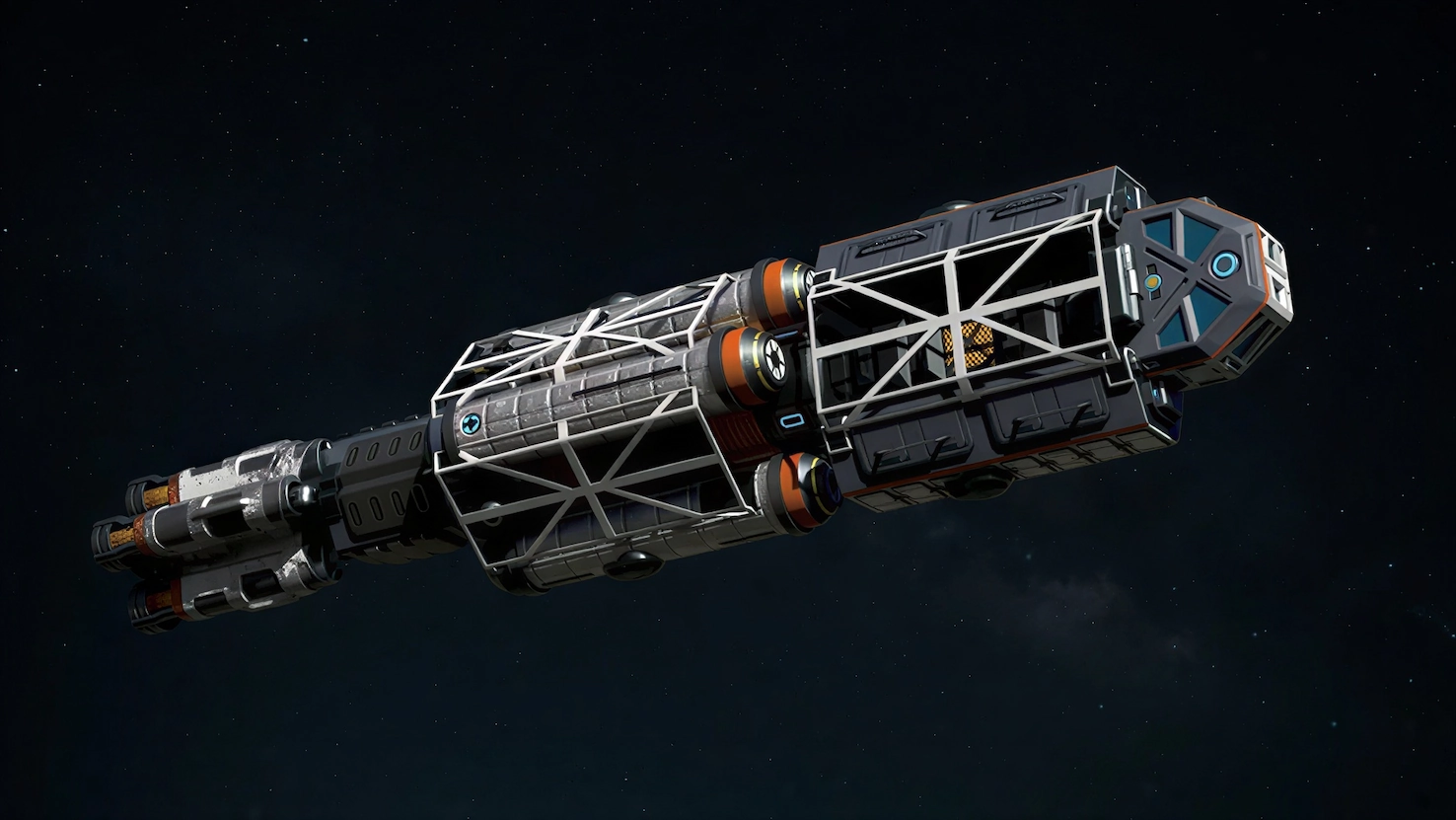
two new ship sets
Dark Skies also adds two visual ship collections. One uses a NASA-inspired design, while the other adopts a more industrial hard-science-fiction appearance. Players can select these styles while designing their fleets, giving spacecraft a different identity without changing the underlying ship-construction system.The addition is cosmetic rather than a new mechanical layer, but it fits a game in which ships are assembled from individual hulls, weapons, drives, radiators, armor and support modules. Terra Invicta’s vessels are tools created for specific orbital and tactical roles rather than fixed hero ships, so visual variety helps distinguish fleets built by different players or factions.The NASA-inspired set should work particularly well with the 2003 scenario, supporting the impression that humanity’s military expansion grew directly from recognizable early twenty-first-century space technology. The industrial style offers a rougher alternative suited to fleets assembled under harsher conditions.These sets are not enough to justify the expansion alone, but they complement the larger focus on alternate versions of human development. If history changes, the spacecraft emerging from that history should not always look identical.

an expansion for returning commanders
Dark Skies requires the base game and is aimed primarily at players already familiar with Terra Invicta’s systems. Both scenarios alter the conditions of a full campaign rather than introducing a separate tutorial or compact story mode. The expansion is therefore less suitable as a first experience than the standard modern-day scenario. Experienced players are more likely to appreciate the strategic consequences of an earlier start or devastated Earth. They already understand which nations normally provide research, economic power and launch capability, allowing them to recognize how significantly the altered map changes familiar priorities.The expansion also arrives after Terra Invicta completed its Early Access period and launched version 1.0 on January 5, 2026. The base game currently holds an 83 Metacritic score and a Very Positive Steam reception, giving Dark Skies a stable foundation rather than expanding a project still waiting for its basic structure to be completed. Initial Steam reception for the DLC is positive, although the number of reviews remains very small and should not be treated as a settled consensus. At the time checked, 96 percent of 31 Steam purchaser reviews were positive. The introductory price is €8.99 after a ten-percent launch discount, with the standard listed price at €9.99. The offer is scheduled to end on August 10.
why alternate history fits terra invicta
Alternate-history scenarios can sometimes feel like decorative changes placed over the same strategy game. Dark Skies has a stronger foundation because Terra Invicta already models the relationship between geopolitics, ideology, science, industry and access to space. Changing the start date affects available technology. Changing the political map affects which nations can be controlled. Changing global stability affects investment and military policy. Changing humanity’s level of development affects how quickly factions can build an extraterrestrial presence. The game’s existing systems are therefore capable of responding to alternate history rather than merely illustrating it. The scenarios also reinforce the idea that the alien invasion is not experienced by a unified species. It arrives in a specific historical moment and exploits the political structures that exist at that moment. Humanity’s ability to resist depends not only on scientific advancement, but on whether competing groups can control or cooperate with the institutions capable of turning knowledge into power.The 2003 scenario asks whether foreknowledge and preparation are enough when the world refuses to recognize the real enemy. Broken Earth asks whether a species that nearly destroyed itself can rebuild quickly enough to survive something worse. Both are natural extensions of Terra Invicta’s central question. The game is not only about defeating aliens. It is about deciding what humanity becomes while preparing to face them.