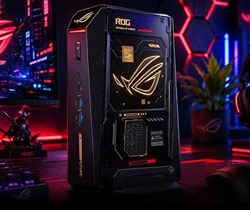
STEAMROLLER PC | WINDOWS IS NO LONGER REQUIRED
MetaPCs has introduced a new prebuilt gaming desktop called Steamroller, and what immediately separates it from most systems in this price range is not just the hardware, but the operating system it ships with. Instead of the usual Windows setup, this machine comes preinstalled with SteamOS, Valve’s Linux-based gaming platform that has so far mostly been tied to the Steam Deck ecosystem. With this move, SteamOS is stepping into a full desktop form factor, and Steamroller becomes one of the first ready-made consumer PCs to push it in that direction. This also signals a wider attempt to test how far Linux gaming can go in a mainstream desktop environment, especially outside Valve’s own hardware control. For users, it means a noticeably different out-of-the-box experience compared to standard Windows prebuilts, with gaming taking priority from the very first boot. The system is available for preorder at $1,299, placing it firmly in the mid-range gaming category where competition is already very strong.
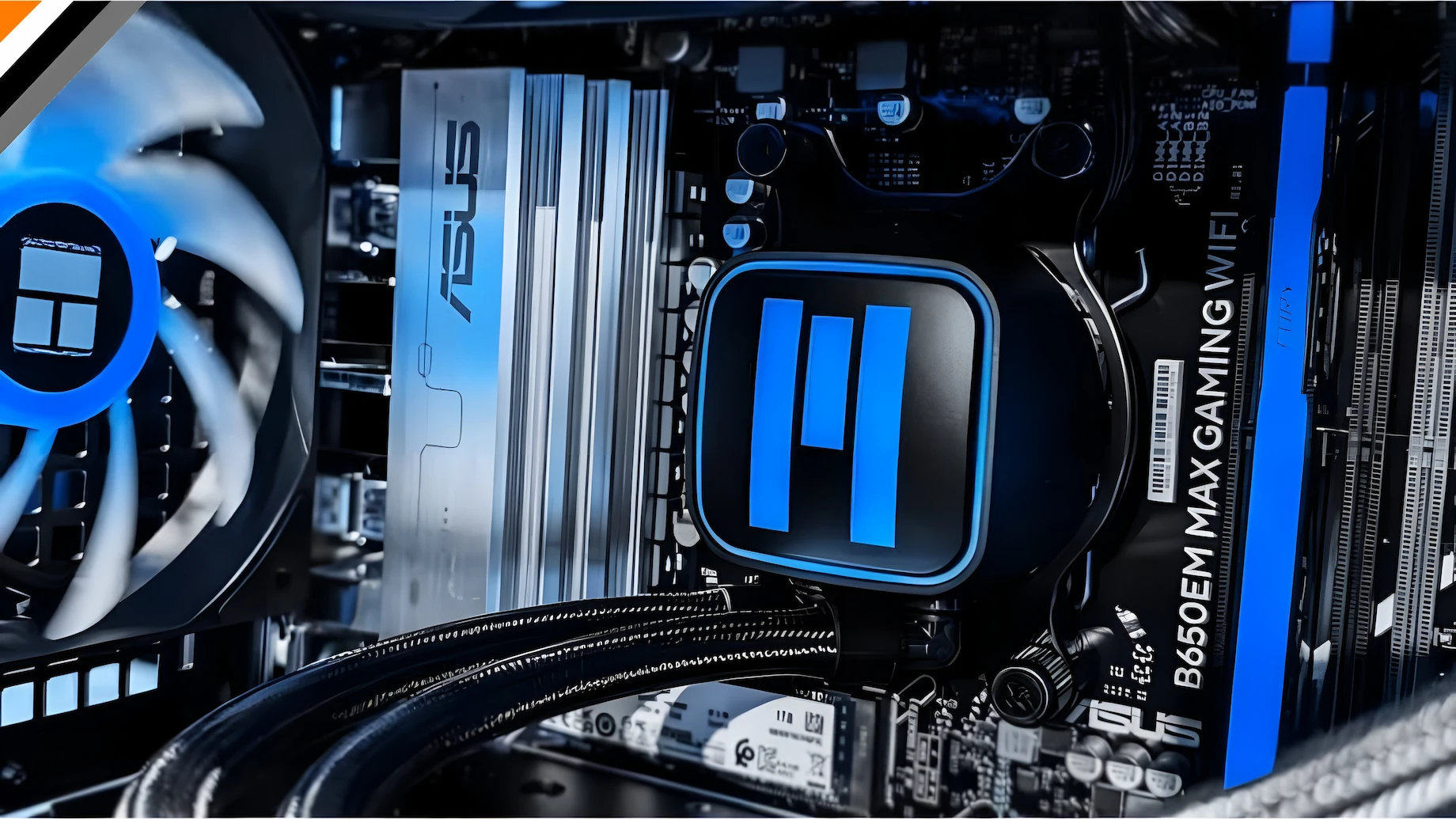
Inside, Steamroller is built around a balanced and modern configuration aimed at stable 1080p and solid 1440p gaming performance. It uses the AMD Ryzen 5 9600X processor paired with the Radeon RX 7600 graphics card, a combination that is already well-established for efficient performance in current games without pushing into high-end pricing. Alongside that, MetaPCs includes 16GB of DDR5 memory and a 1TB NVMe SSD, which has effectively become the standard baseline for smooth gaming in 2026. The system is cooled by a 240mm liquid cooling solution, while power delivery is handled by a 650W Gold-rated PSU, all placed inside a conventional upgrade-friendly desktop case that doesn’t lock users into any proprietary ecosystem. The more important shift here is what happens on the software side once the system boots up. SteamOS replaces the traditional Windows environment entirely and relies on Valve’s Proton compatibility layer to run a large portion of Windows-based games through Linux. In practice, this turns Steamroller into something closer to a simplified console-style PC, where the user experience is centered around Steam rather than a full desktop operating system. The idea is to reduce friction and make gaming the primary focus, but without removing the flexibility of a standard PC platform underneath.

However, unlike Valve’s own hardware experience on the Steam Deck, this desktop implementation does not appear to include deeper system-level console features such as advanced suspend/resume behavior or tightly integrated living room UI optimizations. That keeps Steamroller in a slightly different position it is not a fully console-like ecosystem, but also not a traditional Windows gaming PC. Instead, it sits in between those two worlds, trying to combine plug-and-play simplicity with desktop-level flexibility. What makes this approach especially interesting is how it exposes the current limits of Linux-based gaming outside Valve’s controlled ecosystem. While the combination of the Ryzen 5 9600X and Radeon RX 7600 is already proven for modern gaming workloads, actual user experience will depend heavily on how individual titles behave under Proton. Most single-player and modern AAA games run without major issues, but certain competitive multiplayer titles that rely on aggressive anti-cheat systems can still present compatibility barriers. Because of that, Steamroller is not just a hardware product, but also a real-world test of how far SteamOS can realistically go in mainstream PC gaming. In that sense, Steamroller feels less like a final product and more like a transitional step. It shows a clear attempt to bring SteamOS beyond niche or handheld usage and into standard desktop systems, but it also highlights that the ecosystem is still not fully uniform across all game types and use cases. If compatibility continues to improve, this type of system could become a normal option in prebuilt gaming PCs. If not, it will likely remain an interesting experiment that marks a specific moment in the evolution of PC gaming rather than defining its future.