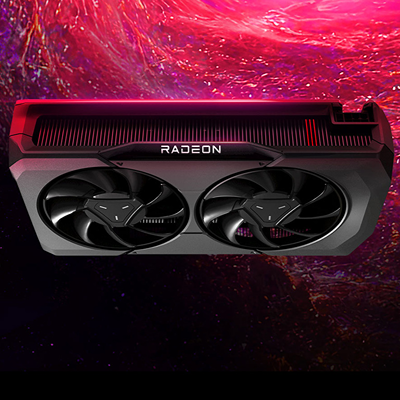
RADEON RX 9050 ANNOUNCED | RDNA 4 FINALLY GOES BUDGET
A modern graphics card below the usual mid-range price line has become unusual enough to qualify as real news. AMD has expanded its RDNA 4 family with the Radeon RX 9050, a compact entry-level desktop GPU aimed primarily at 1080p gaming and systems that do not need the power, cooling or price of an RX 9060-series model. The official specification lists 16 Compute Units, 1,024 Stream Processors, 16 ray accelerators and 32 AI accelerators, with a game clock of 1,920 MHz and boost frequency reaching 2,600 MHz. The main retail configuration carries 8 GB of GDDR6 memory running at up to 18 Gbps across a 128-bit interface, producing 288 GB/s of memory bandwidth alongside 32 MB of Infinity Cache. AMD lists typical board power at only 92 W, a single eight-pin power connector and a recommended 450 W power supply, making the RX 9050 suitable for smaller and more affordable gaming systems. The reported retail price is $279, although initial availability is focused on selected Asia-Pacific and Latin American markets rather than a broad simultaneous global release.
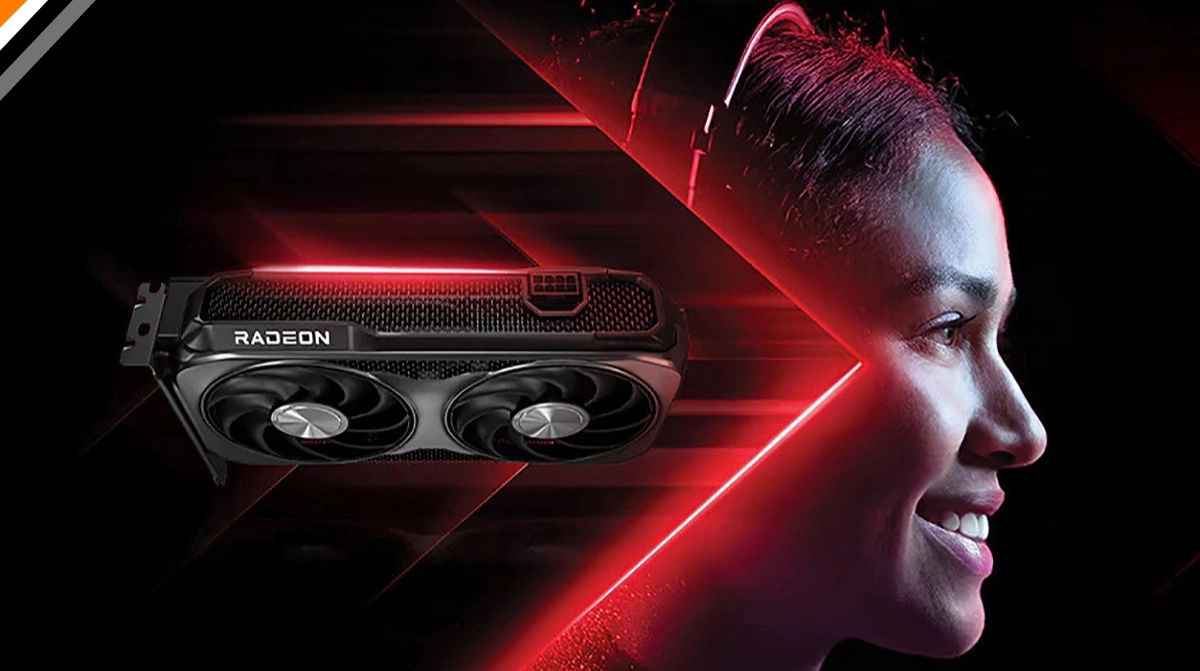
rdna 4 reaches the entry level
The RX 9050 brings the architecture and feature set of AMD’s current generation into a considerably lower performance class. It supports third-generation ray-tracing accelerators, second-generation AI hardware, DisplayPort 2.1a, HDMI 2.1b and hardware encoding and decoding for AV1, H.264 and H.265. FSR 4 support also gives the card access to AMD’s latest upscaling and frame-generation technology, although those tools will matter most when the underlying GPU can first produce an acceptable base frame rate. AMD’s own performance figures are measured predominantly at 1080p Medium settings, which clearly communicates the intended use. The company lists 96 FPS in Cyberpunk 2077, 131 FPS in Forza Horizon 6 and 85 FPS in Pragmata under its stated test conditions, while competitive games naturally reach much higher numbers. These are manufacturer results rather than independent benchmarks, so they should be treated as an indication of target performance rather than a final buying verdict. Still, the message is straightforward: this is not a low-cost 1440p card disguised through marketing. It is intended for conventional 1080p gaming with adjusted settings, esports titles and affordable prebuilt computers.
half the hardware, not half the questions
The specification also shows how aggressively AMD reduced the design. The RX 9050 contains approximately half the Compute Units and Stream Processors of the RX 9060-class Navi 44 implementation, with peak FP32 performance listed at 10.6 TFLOPs. Its 8 GB memory configuration is adequate for the intended 1080p class, but not especially generous for a new GPU arriving in 2026. The $279 price therefore needs context. It is cheaper than most current-generation discrete cards, but it is not automatically a bargain simply because it falls below $300. Independent testing will need to establish how it compares with discounted older Radeon hardware, Intel’s entry-level Arc cards and Nvidia alternatives available in each region. The low 92 W board power is more immediately attractive, particularly for compact systems, quieter coolers and users upgrading machines with modest power supplies. ASRock is currently the most visible board partner, with Challenger models exposing the card’s straightforward dual-fan, single-connector approach rather than surrounding it with an unnecessarily large premium cooler.
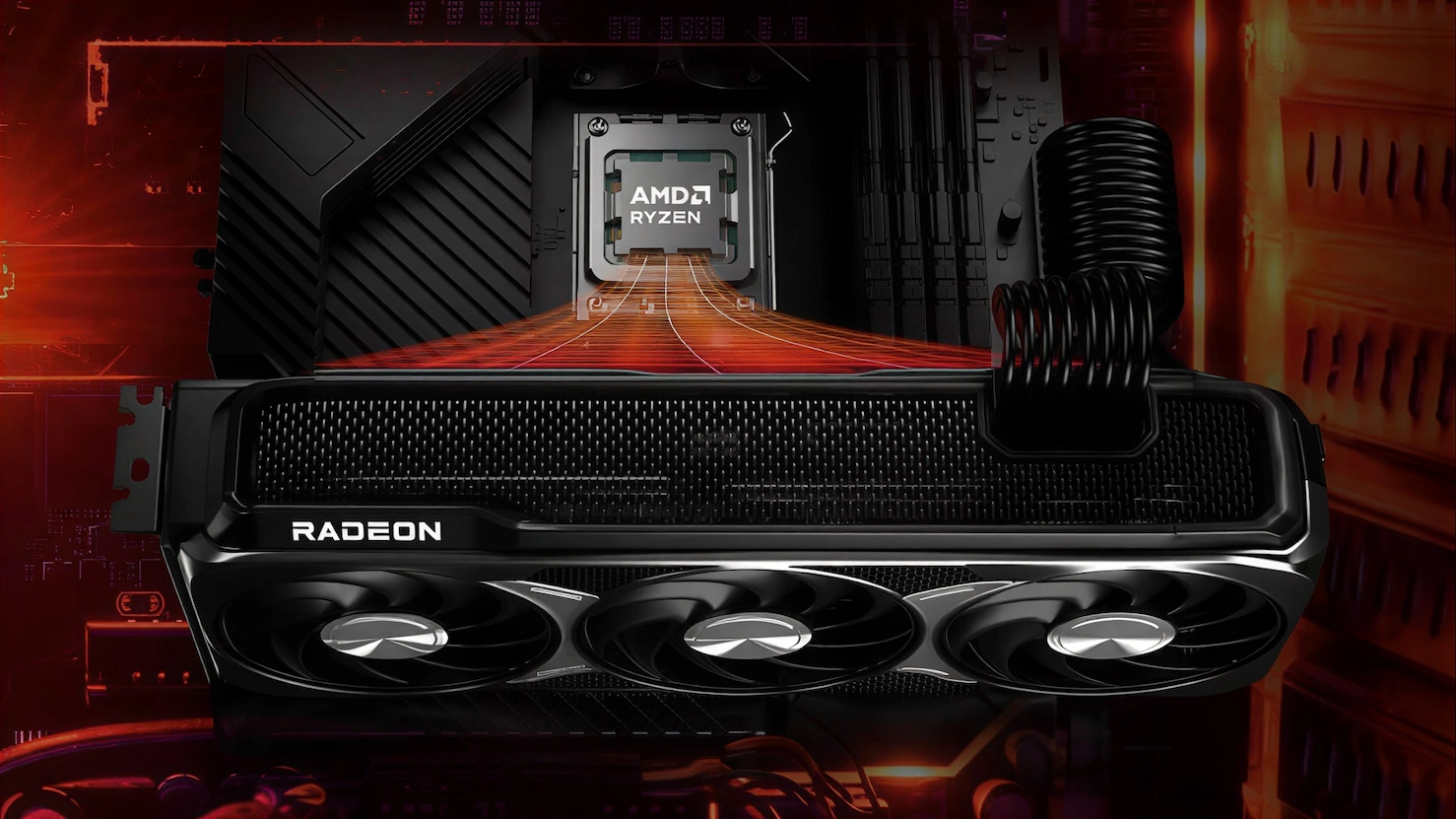
the 4 gb version is difficult to defend
The less welcome part of the announcement is the appearance of a Radeon RX 9050 configuration with only 4 GB of GDDR6 memory. ASRock has listed both 4 GB and 8 GB versions, with the smaller model reducing the memory interface to 64-bit and bandwidth to 144 GB/s. Reports currently associate the 4 GB card mainly with OEM and prebuilt systems rather than normal standalone retail sales. That distinction matters, but it does not make the product technically convincing. Four gigabytes may remain sufficient for lightweight esports titles, older games and restricted 1080p settings, yet it is already a severe limitation in many modern releases. Buyers of lower-cost prebuilt computers are also the group least likely to replace a graphics card shortly after purchase, making such a narrow memory configuration particularly questionable. FSR 4 and frame generation cannot recover textures and assets that do not fit comfortably inside available VRAM. The 8 GB model represents a reasonable minimum for this class; the 4 GB version looks like a cost-saving measure that could make an apparently affordable system age much faster than expected.