NEOCLASSIC GAMES | ELDEN RING | WHY THE LANDS BETWEEN STILL MATTER
Elden Ring is not a neoclassic because it sold well, won awards or became one of those games everyone had to talk about for a few months. Those things helped, of course, but they are not the real reason it still feels important. Elden Ring belongs in the neoclassic space because it changed the way many players looked at modern open-world design. It arrived in 2022 and refused to behave like the usual large-scale RPG map. It did not constantly explain itself. It did not cover every road with icons. It did not treat mystery like a problem that needed to be solved by a tutorial window. Instead, it placed players in the Lands Between and trusted them to wander, fail, notice, remember and slowly understand. That sounds simple, but by the time Elden Ring arrived, that kind of trust felt almost radical. Modern open worlds had become very good at showing players where to go, but not always good at making them want to go there. Elden Ring reversed that feeling. It made distance interesting again. It made a hill, a ruin, a tower or a strange light on the horizon feel like enough reason to move forward.
a world that wanted you to get lost
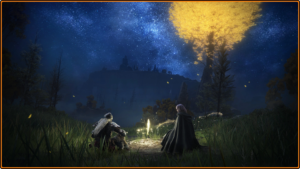
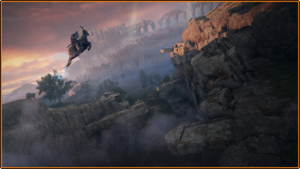
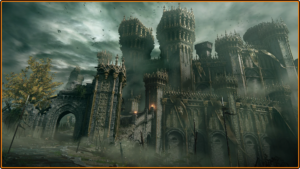
The Lands Between is one of the main reasons Elden Ring already feels bigger than its release year. Open-world games often promise freedom, but many of them quietly keep the player on a leash. They point, highlight, checklist and guide until exploration becomes a kind of decorated commute. Elden Ring works differently. It gives you direction, but it does not flatten the world into instructions. You see something in the distance and go there because it looks strange, dangerous or impossible to ignore. A castle on a cliff. A ruined tower. A glowing tree. A swamp that probably means trouble. A door you are not ready to open. The game understands that curiosity is stronger when it is not overexplained. That is where Elden Ring feels almost old-school, but not outdated. It brings back the pleasure of discovering things because you paid attention. A cave is not just a cave because the map says “cave.” It is something you found while taking a wrong turn. A boss is not just content waiting on a list. It is something that interrupts your confidence. A quiet valley can suddenly become a place you remember for twenty hours because something terrible happened there. The game lets the world become personal through experience instead of constantly telling you what to feel.The design is also careful about scale. Elden Ring is huge, but its best moments do not come only from size. They come from layering. A normal-looking area can hide a dungeon. A dungeon can hide a path. A path can lead to an underground world that feels like it should have been a separate game. That sense of vertical and hidden space gives the Lands Between a strange density. The map is not just wide. It feels buried. It feels like history is sitting underneath the grass, stone and poison. That is why exploration rarely feels empty even when you are simply riding across the land. The world always suggests that something is nearby, below, above or behind you. This is one of the reasons Elden Ring did not age like a normal hype release. Many big games feel massive during launch month and smaller once the conversation moves on. Elden Ring still feels large because its design is not built only on surprise. It is built on structure, atmosphere and player memory. Even after the map is known, the world keeps its identity.
freedom with real consequences
The freedom in Elden Ring works because it is not soft. The game lets you go almost anywhere early, but it does not promise that every direction will be reasonable. That is important. A lot of open-world games scale the world around the player so aggressively that danger becomes cosmetic. Elden Ring does not do that in the same way. You can walk into the wrong place and know immediately that you are not supposed to be comfortable there. Sometimes the answer is not to win. Sometimes the answer is to leave, remember the place and come back later with better gear, more levels or simply more understanding. That loop gives the game a special rhythm. You are not just clearing zones. You are building a mental map of fear, curiosity and revenge. A monster that destroys you early becomes a future target. A locked path becomes a promise. A distant region becomes a question. The world teaches through resistance, and that resistance makes progress feel earned. This is also why Elden Ring manages to be welcoming without becoming easy. It is probably one of FromSoftware’s most accessible games in structure because players have more options than before. If one boss blocks your path, you can leave and explore somewhere else. You can change weapons, summon help, build differently, farm, experiment or ignore the main route for hours. But the game does not remove the friction that gives its victories weight. It opens the door wider without sanding the teeth off the experience. That balance is difficult. Too much freedom can make a game feel shapeless. Too much punishment can make freedom pointless. Elden Ring usually finds the middle ground. It allows players to create their own path while still making the world feel dangerous enough to matter. Even when you become stronger, the Lands Between never completely becomes safe. That is part of its identity. The game gives you power, but it does not let you forget where you are.
combat that turns patience into language
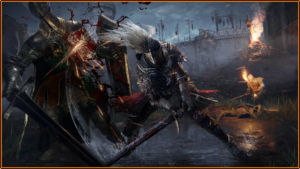
Elden Ring’s combat is not only about reflexes. Reflexes matter, but patience matters more. Spacing, timing, stamina, animation reading, weapon choice and panic control all become part of the language. The game constantly asks you to stop button-mashing and actually observe. That is not always comfortable. Sometimes it is frustrating. Sometimes it feels almost unfair until the pattern starts to make sense. But when it clicks, Elden Ring creates the kind of satisfaction that is hard to fake. The build variety also gives combat a long life. A player using a colossal weapon is not experiencing the same rhythm as someone relying on bleed, sorcery, shields, faith, bows or fast dexterity weapons. The same world can feel different depending on what kind of Tarnished you build. That matters for a game with this kind of scale. It gives players ownership over their journey without turning the RPG systems into empty numbers. The bosses are the loudest part of that identity, but not the only part. Regular enemies, field encounters, ambushes, horseback fights and dungeon layouts all push against the player in different ways. Elden Ring is at its best when combat, space and atmosphere work together. A fight in a golden arena can feel mythic. A fight in a rotten swamp can feel miserable in the right way. A fight in a tiny room can become personal for all the wrong reasons. The game knows how to make place matter. There is also a certain honesty to the combat. Elden Ring is not always smooth in the way some action games are smooth. It can be harsh, occasionally awkward, sometimes even exhausting. But its combat has weight because it asks the player to commit. Mistakes matter. Greed matters. Panic matters. You can feel when you attacked one extra time. You can feel when you rolled too early. You can feel when you walked into a fight with the wrong mindset. That kind of feedback is why victories stay in memory. The game does not simply hand you a win because the animation looked cool. It makes you earn the moment.
atmosphere before explanation
Elden Ring’s story is powerful partly because it does not behave like a normal video game story. It is fragmented, strange and often indirect. Characters speak like they already know the shape of a world you are only beginning to understand. Items carry pieces of history. Bosses feel like myths that have become physical problems. Places tell stories through architecture, enemy placement, decay and silence. That style will not work for everyone. Some players want clearer storytelling, cleaner character arcs and more direct answers. Elden Ring is not built for that kind of comfort. It gives fragments and trusts the player to sit with them. The result is a world that feels ancient, damaged and half-buried under its own history. You do not always understand everything immediately, but you feel that everything has weight. This is where the collaboration between FromSoftware’s worldbuilding style and George R. R. Martin’s mythic background material became part of the game’s identity. The final game is still clearly FromSoftware in how it presents mystery, loss and decay, but the larger family drama, divine conflict and broken royal history give the Lands Between a grander frame. It feels like walking through the remains of a mythology after the heroes, gods and monsters have already ruined everything. The important thing is that Elden Ring never feels like it is begging the player to understand every piece of lore before the atmosphere can work. The mood works immediately. The golden light, the broken statues, the dead soldiers, the impossible creatures, the quiet churches and the distant castles all speak before the text does. That is one of the game’s strongest achievements. It uses silence and visual design as part of storytelling, not just decoration.

why the silence matters
Many modern games are afraid of silence. They fill the space with dialogue, markers, hints, reminders and constant noise. Elden Ring understands that silence can make a world feel larger. Riding through Limgrave or staring across Liurnia works because the game gives the player room to feel small. That feeling of smallness is important. You are not the center of the world at first. You are a survivor moving through the remains of something much older and more powerful than you. That is also why the game’s lonely tone sticks. Even when there are characters, merchants, enemies and questlines, Elden Ring often feels like a solitary journey. Not empty, but solitary. The world is full of things, yet still somehow lonely. That contrast gives the game a special emotional texture. You are surrounded by history, but almost nobody is there to explain it properly. You are constantly moving forward, but the world feels like it already ended before you arrived. For a neoclassic article, that matters more than simple popularity. Elden Ring is memorable because it has a mood that players can immediately recognize. You do not need to see the title to know when a landscape feels like Elden Ring. The combination of beauty, danger, sadness and mystery became part of the game’s visual language. That is not easy to achieve in a market full of huge fantasy worlds.
a modern game with old instincts
Elden Ring feels modern in scale and presentation, but its instincts are older. It trusts the player in ways many modern games avoid. It allows confusion. It allows failure. It allows players to miss things. That last part is important. A game that allows missed content feels more alive, because not everything exists only to be consumed efficiently. Some places are discovered late. Some quests are strange. Some details remain unclear. Some secrets are never found by many players at all. That design can be annoying, but it also gives the world texture. Elden Ring does not feel like a perfectly organized product trying to show you every feature. It feels like a place. A hostile, broken, unfair, beautiful place. That is why players kept sharing discoveries after launch. The game created conversation not only through marketing, but through actual exploration. People talked because they found things. They compared routes, bosses, hidden areas, weapons, strange characters and terrible mistakes. That community discovery was part of the game’s life. This is one of the reasons Elden Ring became more than another FromSoftware success. It brought that sense of discovery to a much larger audience without removing what made the studio’s games distinct. It did not become easy just to be popular. It became larger, more flexible and more open, but still kept the core feeling of danger and uncertainty.
the flaws do not erase the achievement
Elden Ring is not perfect. That is important to say because “modern classic” does not mean flawless. Some side dungeons repeat ideas. Some boss designs divide players. Some late-game damage spikes feel aggressive. Some areas do not carry the same magic as the strongest parts of the map. The open world is so large that a few repeated structures and familiar enemy patterns are impossible to ignore after enough hours. But those flaws do not erase what the game achieved. If anything, they make its success more interesting. Elden Ring is not a perfect machine. It is too strange, too hostile and too uneven for that. But it has a soul, and that is much harder to build than a clean checklist. Many games are smoother. Many games are easier to recommend to everyone. Many games are more comfortable. Very few feel this memorable. That is the real neoclassic argument. Elden Ring will be discussed for years not because every piece of it is perfect, but because its strongest ideas changed the conversation. It made players ask why so many open worlds feel over-explained. It reminded people that getting lost can be powerful. It showed that difficulty and freedom do not have to cancel each other out. It proved that a huge game can still feel mysterious.
Shadow of the Erdtree and the longer life of the game
Shadow of the Erdtree later reinforced how much life the world still had. The expansion added another dense and demanding region to a game that already felt massive, and it reminded players that Elden Ring’s world could still surprise them. That is not a small thing. Many expansions feel like extra content attached to a finished game. Shadow of the Erdtree felt like opening another hidden door in a place that was already full of hidden doors. But even without the expansion, the base game had already secured its place. Elden Ring was not just another big RPG. It became a reference point. After it, many open-world games looked more guided, more predictable and more afraid of letting players feel lost. That does not mean every open-world game should copy Elden Ring. That would be the wrong lesson. The better lesson is that players still respond to mystery, danger and trust when the world is strong enough to support them. Elden Ring’s longer life also comes from how personal its journeys can be. Players remember different weapons, different first bosses, different areas, different disasters and different victories. That makes the game feel less like a single fixed experience and more like a collection of personal myths. Everyone has a story about the place that humbled them, the boss that broke them, the build that saved them or the discovery that made the world feel impossible again.


![ELDEN RING [2022]](https://pcdoors.net/wp-content/uploads/2026/07/capsule_616x353-4.webp)