NEOCLASSIC GAMES | DISCO ELYSIUM | TWENTY-FOUR VOICES, ONE DETECTIVE
A dead man hangs behind a ruined hostel, a detective wakes without a name, and an entire city seems prepared to argue with him before he has managed to locate both shoes. Few role-playing games announce their intentions with such confidence. The murder investigation provides structure, but it is never the true centre of Disco Elysium. Revachol is examining the detective as closely as he examines the body, forcing his politics, failures, addictions, professional instincts and remaining dignity into every conversation. Released for PC on October 15, 2019, ZA/UM’s debut arrived without traditional combat, cinematic spectacle or a familiar heroic progression system. It instead placed language, personality and failure at the centre of role-playing, then built an entire city district capable of responding to them. The Final Cut followed in March 2021 as a free update for existing PC owners, adding full English voice acting, new political vision quests and further content. Those additions completed the presentation, but they did not create the game’s reputation. Disco Elysium had already established itself as one of the defining RPGs of its era because it understood that a character sheet could represent a divided mind rather than a collection of combat statistics.
the case was never only about the body
The investigation begins with recognizable detective work. There is a victim, a crime scene, a hostile group of suspects and a district filled with people who know more than they initially admit. Evidence must be examined, stories compared and access negotiated. Yet the murder gradually becomes a route through Martinaise rather than a closed puzzle standing above it. Every interview reveals another layer of labour conflict, occupation, poverty, ideology or personal compromise. The harbour strike and the confrontation surrounding it are not background events added to make the city appear busy; they shape who controls information, who can move safely and how different residents interpret the same death. The detective cannot remain politically invisible because Revachol does not offer neutral ground. Even refusing to commit becomes a position that the game notices. That refusal to separate the case from the city is one reason Disco Elysium acquired neoclassic status so quickly. Many RPG investigations become temporary diversions between battles, while detective games often isolate clues from the wider economic and political world. Here, understanding the victim requires understanding the neighbourhood, and understanding the neighbourhood means confronting histories that cannot be solved by identifying one guilty person. Revachol carries the remains of a failed revolution, foreign occupation and exhausted institutions, but the game never reduces those conditions to a lore archive. They appear in buildings, accents, uniforms, damaged relationships and arguments overheard near the street. The setting feels old not because it contains ancient ruins, but because everyone is living inside the unfinished consequences of previous generations. The mystery still matters. There are genuine deductions, memorable discoveries and several moments when apparently insignificant details return with greater weight. However, the game’s lasting achievement lies in making the investigation feel insufficient on purpose. Solving one crime cannot repair Martinaise, restore the detective’s past or settle the competing explanations of history. The case gives the player direction while the world continuously expands beyond it. That structure allows Disco Elysium to function as a detective story without pretending that truth automatically creates justice.
twenty-four skills, no reliable narrator
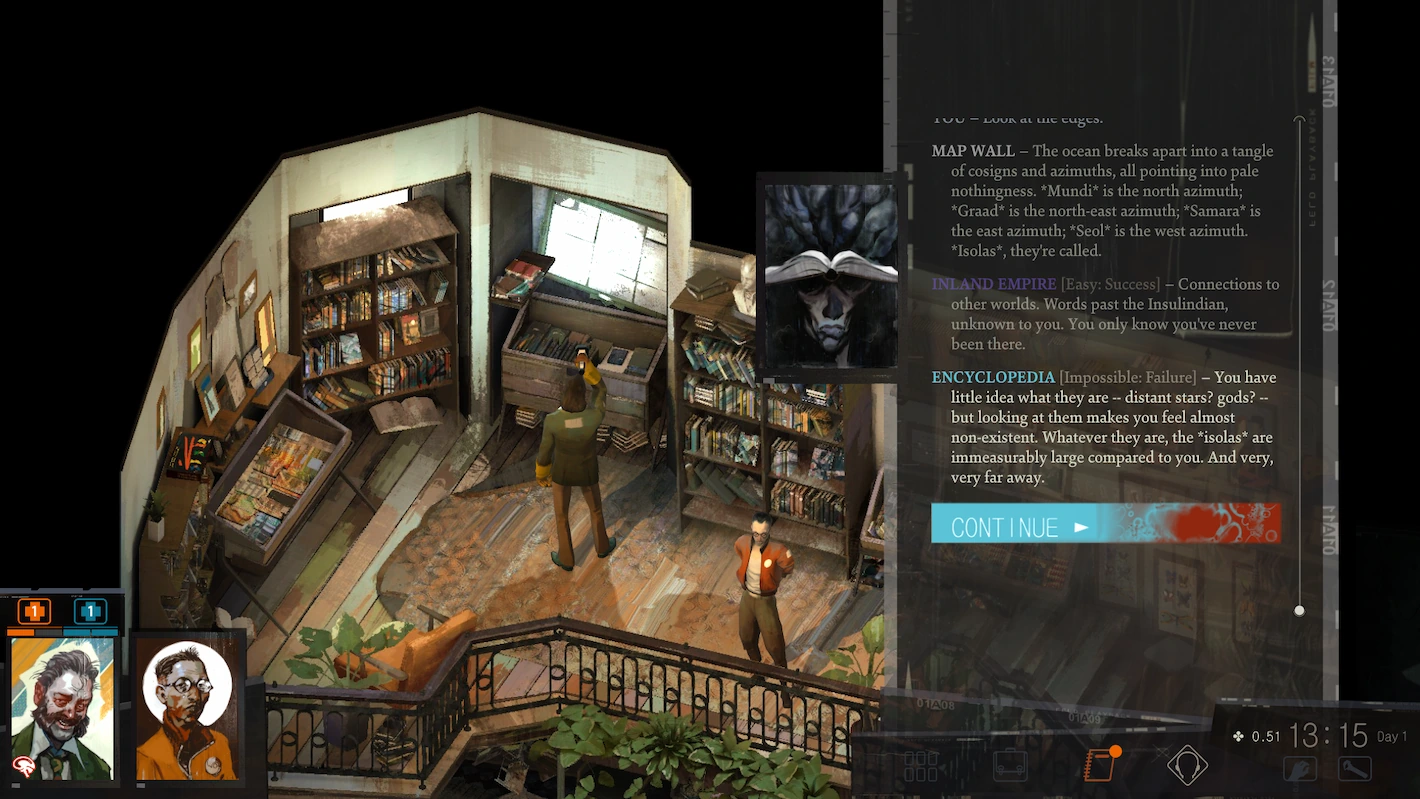
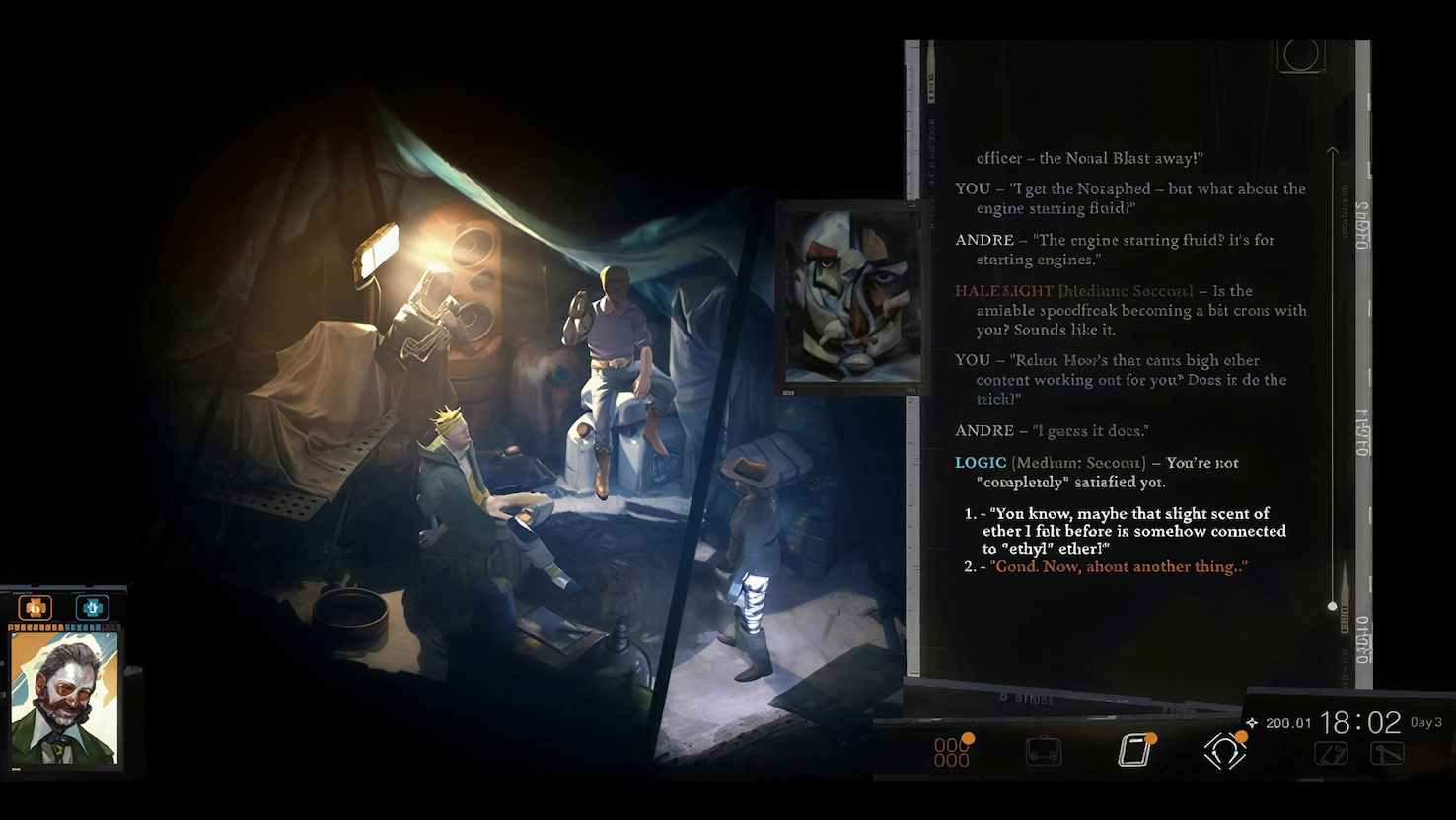
The most recognizable design decision is the transformation of skills into voices. Intelligence, motorics, physique and psyche are divided into 24 abilities, each with its own attitude, language and priorities. Logic searches for consistency. Empathy listens for emotional fractures. Authority demands control. Electrochemistry wants immediate satisfaction. Inland Empire turns intuition into something close to supernatural sensitivity. Shivers listens to the city itself. These are not passive bonuses waiting quietly behind dialogue checks. They interrupt, advise, flatter, threaten and contradict one another. A high skill is therefore not automatically a clean advantage. Strong Authority may detect weakness, but it may also turn a manageable exchange into an unnecessary struggle for dominance. Encyclopaedia remembers information that could be useful or completely irrelevant. Drama recognizes performance while encouraging the detective to perform as well. The player is not assembling a perfect mind. The player is choosing which forms of instability will receive the loudest voice. This system changed the meaning of role-playing statistics. Traditional RPG attributes usually describe what a character can do to the external world: lift heavier objects, cast stronger spells, resist damage or persuade an NPC. Disco Elysium also uses skills to determine how the protagonist interprets reality. Two builds may enter the same room and leave with different understandings of what happened because different thoughts were allowed to speak. The character sheet becomes a psychological lens. Failure supports that design. Missed checks often produce new scenes, information or humiliations rather than a simple dead end. Success can also become dangerous when the skill providing it is overconfident or poorly suited to the moment. The result is not a system where failure is secretly always better; some mistakes close possibilities and some successful rolls provide essential progress. The important distinction is that failure frequently remains dramatic. It belongs to the character’s story instead of feeling like a command to reload the previous save. The dice remain visible enough to preserve uncertainty. White checks can later be retried after improving relevant skills or discovering modifiers, while red checks usually represent one opportunity that must be accepted as it occurs. This creates tension without turning the entire game into random punishment. Preparation matters, clothing can alter statistics, thoughts can reshape capabilities and conversations may provide new advantages. Chance determines the immediate outcome, but the player still influences what kind of detective is standing in front of the roll.
role-playing without a combat loop
Removing conventional combat was not simply an artistic statement. It forced every surrounding system to carry more weight. There are no routine encounters available to restore momentum when dialogue becomes difficult. Character development, exploration, clothing, money, health and morale all feed back into conversations, investigation and survival. Violence exists, sometimes with severe consequences, but it is treated as an event rather than a renewable resource. This makes Martinaise feel different from the average RPG district. Residents are not divided into quest-givers, merchants and targets. A conversation can be the main encounter of an entire location, and a minor character may remain memorable because of rhythm, worldview or vulnerability rather than mechanical importance. The game trusts the player to remain interested while standing beside a bookstore, examining a wall or discussing cryptozoology with an elderly couple. That trust would collapse without exceptional writing, but the writing rarely functions as decoration. It establishes systems, conceals evidence, changes relationships and continuously defines the protagonist. The absence of combat also exposes the detective’s weakness. There is no reliable physical power fantasy waiting beneath his condition. He can become perceptive, intimidating, compassionate, manipulative or absurd, but he never turns into a conventional RPG hero capable of clearing the district through accumulated strength. His body and mind remain vulnerable. Health and morale can end the investigation in embarrassingly ordinary circumstances, while money, accommodation and basic equipment become practical concerns. The game preserves stakes without relying on enemy density. This approach did not make Disco Elysium universally accessible. Players who need frequent mechanical action may find the reading, walking and layered conversations exhausting. Some exchanges deliberately wander through political theory, history or strange personal obsessions before returning to the immediate issue. The detective’s movement across familiar streets can also become repetitive, especially when the next objective lies at the opposite end of the district. Yet these are not signs that the game forgot to include a traditional loop. The dialogue is the loop. Movement creates time to reconsider information, and the apparent digressions are often the places where characters become more than functional parts of the investigation.
revachol looks like memory
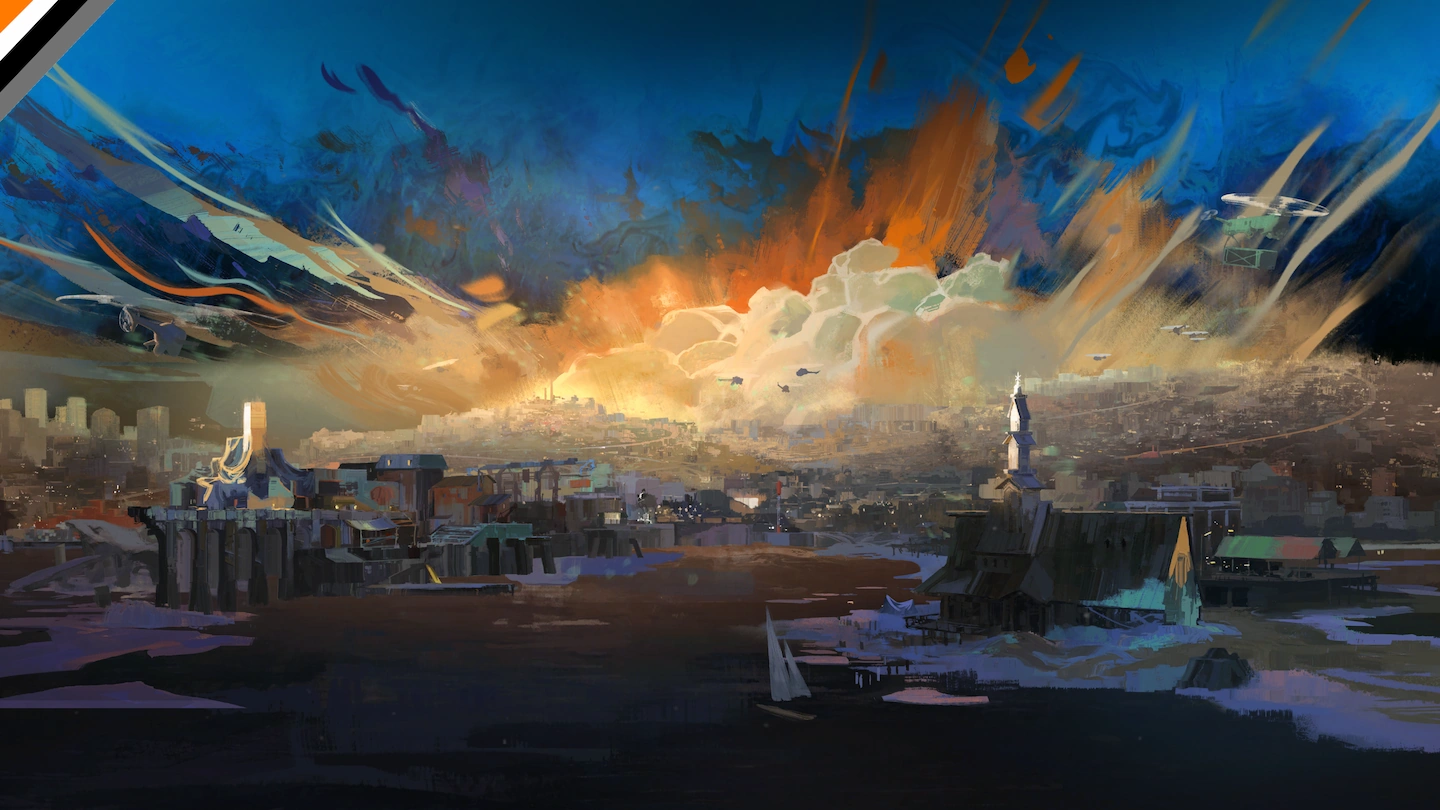
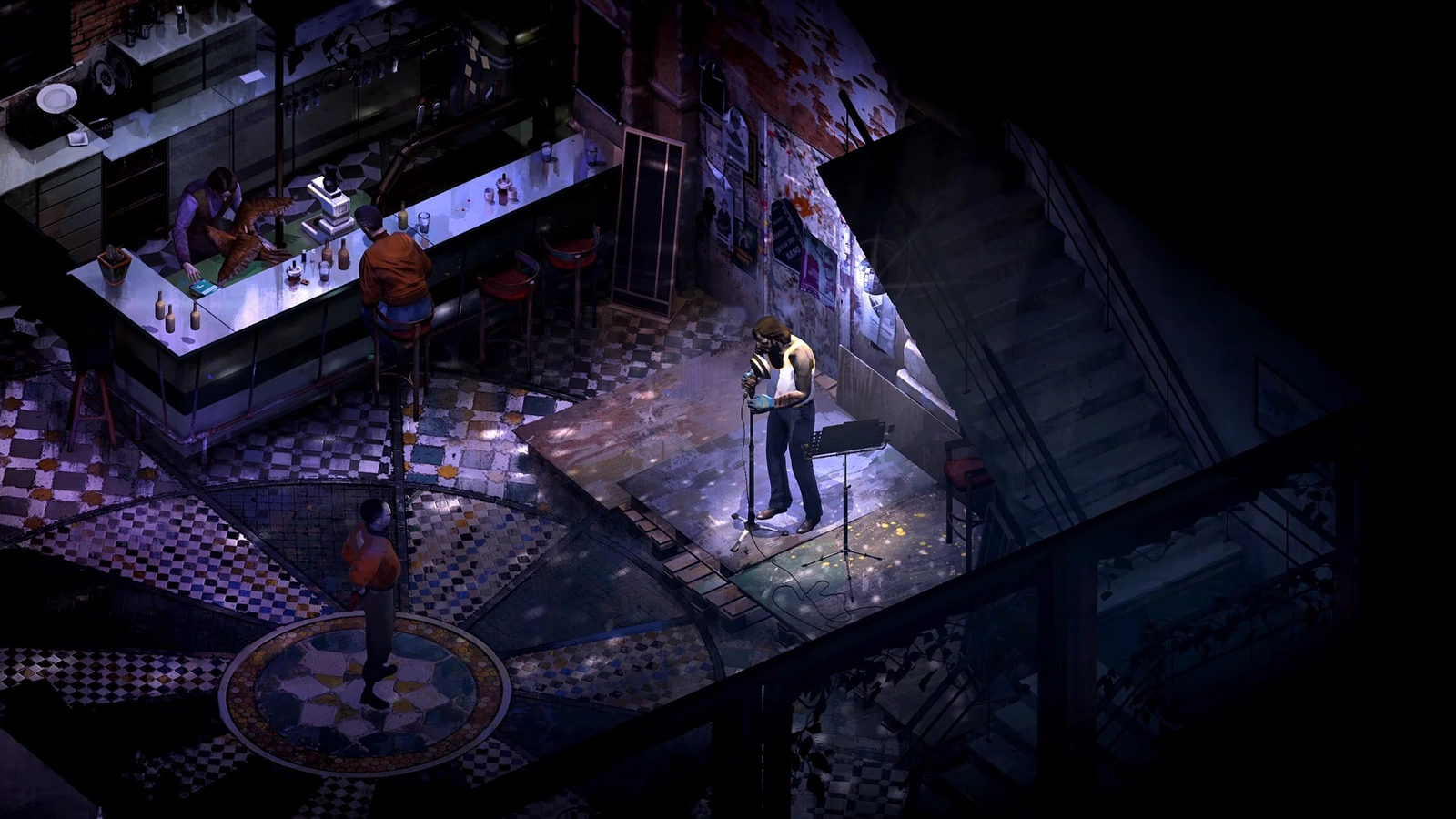
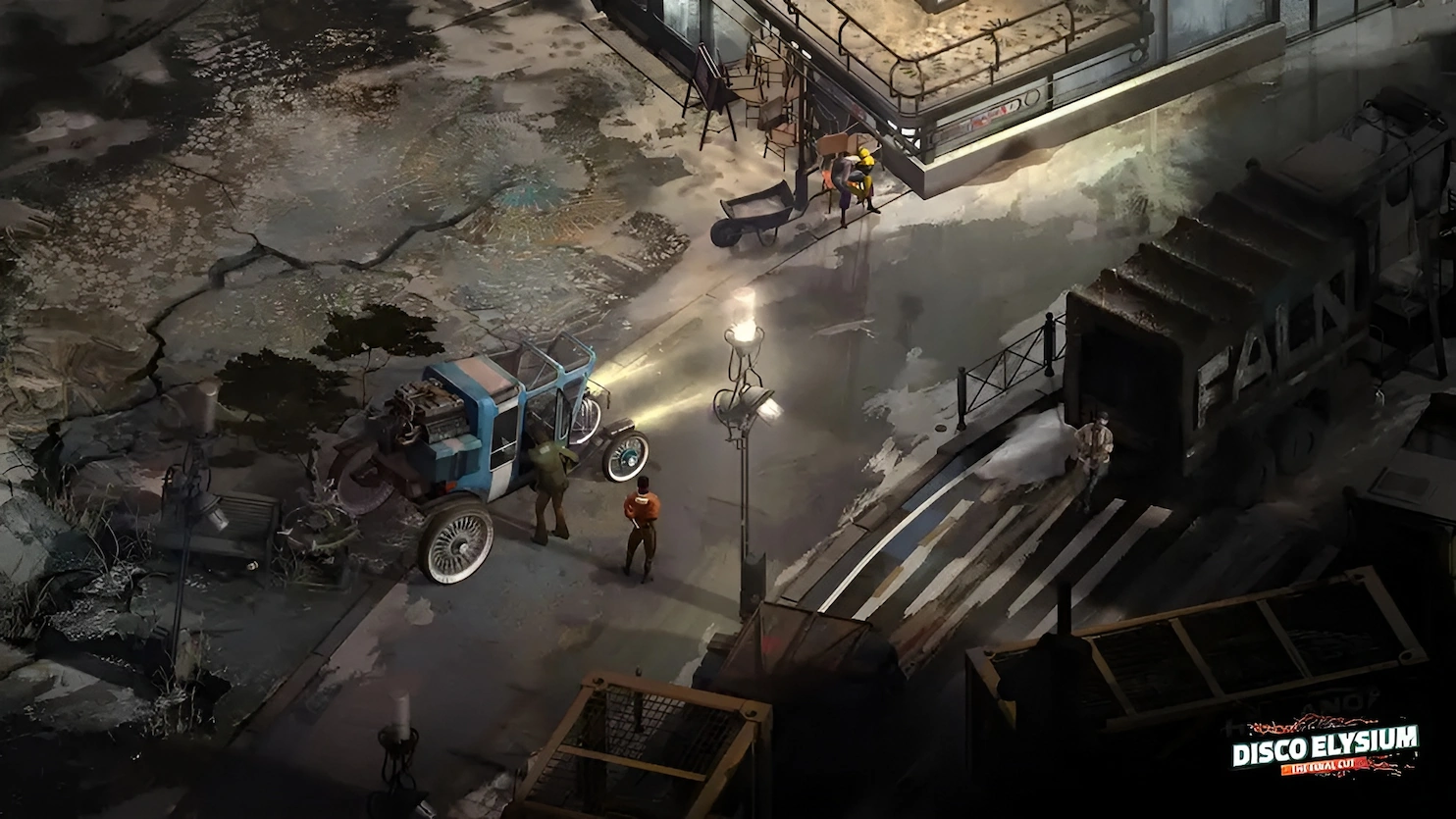
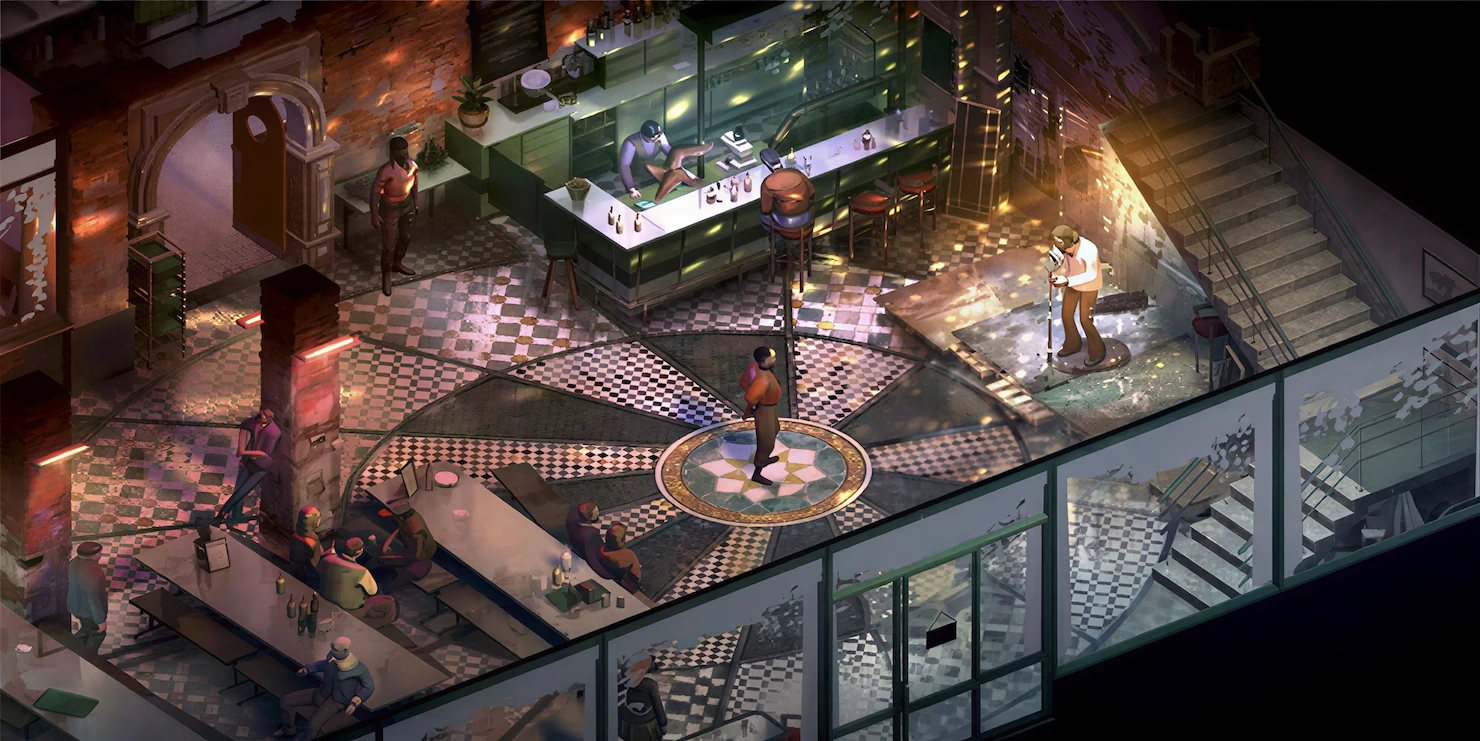
The painterly presentation prevents the city from becoming a clean isometric diagram. Buildings dissolve at their edges, portraits appear emotionally distorted and colours suggest weather, age and mood more strongly than physical precision. Martinaise looks reconstructed from damaged memory. That visual approach connects directly to the protagonist, who is also attempting to rebuild a world from fragments whose reliability cannot be guaranteed. The district is not large by open-world standards, but its concentration works in its favour. Familiar locations accumulate meaning as the investigation progresses. The hostel changes from an embarrassing starting point into a social centre. The harbour gates become political and physical barriers. The coast initially feels empty, then begins revealing lives and histories that the central streets could not contain. Returning to the same spaces does not necessarily mean repeating the same content because time, knowledge and previous decisions alter what can be noticed. Sea Power’s soundtrack strengthens this sense of exhausted grandeur. Brass, guitar and ambient passages make Revachol sound both historical and unfinished, capable of dignity without escaping decay. The music rarely instructs the player to feel heroic. It allows sadness, humour and anticipation to occupy the same location. That mixture is fundamental to the game’s tone. Disco Elysium can be deeply bleak, yet it is also one of the funniest major RPGs of its period. Its humour does not cancel the despair; it gives the people inside that despair enough personality to remain human. The Final Cut’s full English voice acting made this already distinctive presentation more immediate. Different classes, regions and personalities gained audible texture, while the narrator gave the skills a shared foundation without erasing their individual identities. The expanded edition also added political vision quests associated with the game’s major ideological paths. These were not merely extra rewards for choosing dialogue labels. They explored what the detective’s selected beliefs might look like when pushed beyond casual declarations.
politics without the safe distance
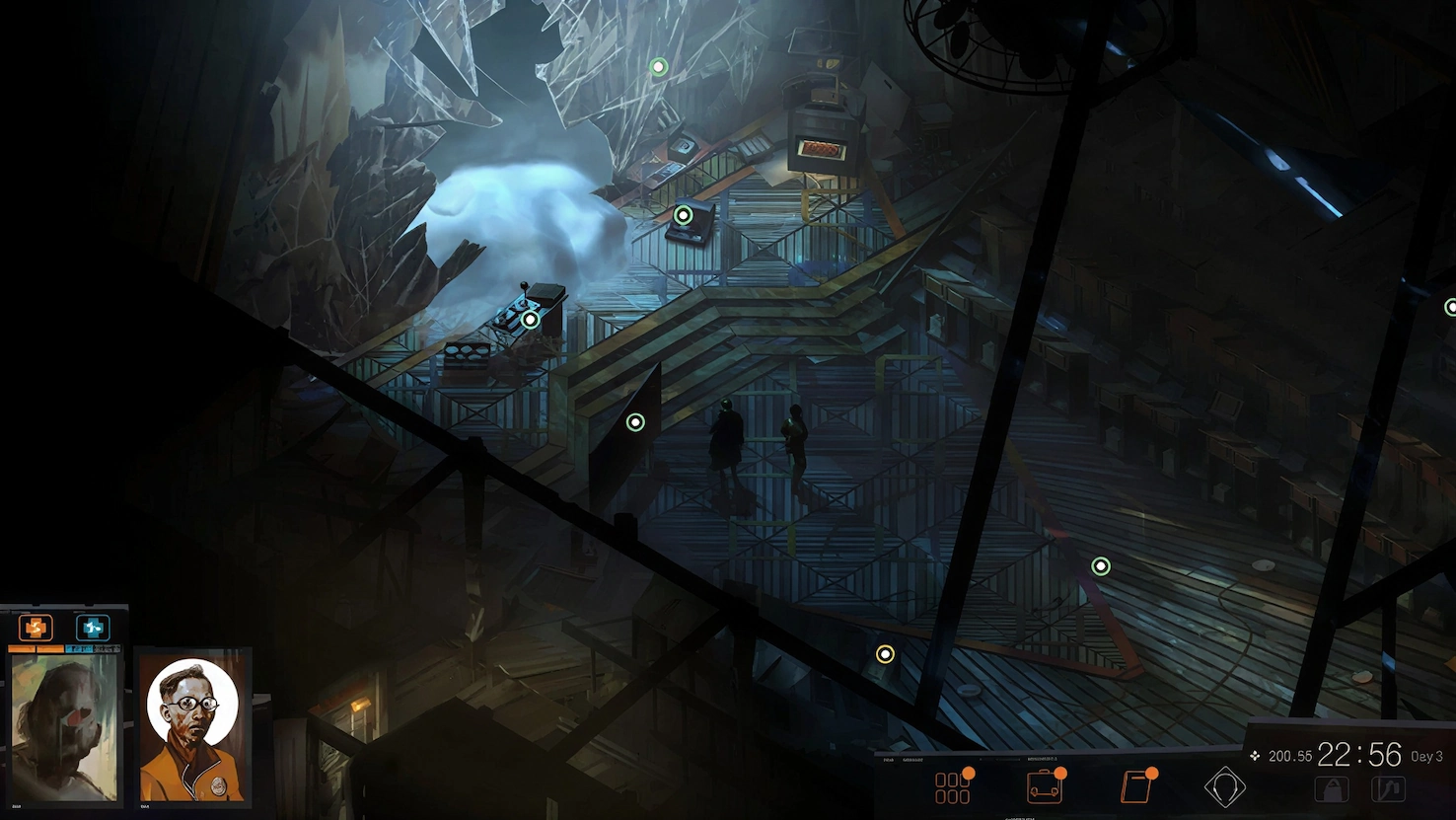
Disco Elysium does not treat ideology as a conventional morality selection. Communism, fascism, moralism and ultraliberalism are available as thought patterns and conversational positions, but none functions as a polished route toward moral certainty. The game is clearly written from particular historical and political concerns, yet it is most interested in how ideas behave inside damaged people. Beliefs can offer genuine analysis, emotional shelter, personal excuse, social identity or delusion sometimes within the same conversation. The detective may adopt an ideology sincerely, opportunistically or because one of his internal voices has decided that a humiliating morning requires a complete theory of society. The game remembers repeated statements and eventually identifies the political direction being formed. This is often funny, but it is not meaningless. The absurdity comes from watching a person convert personal ruin into universal explanation, not from claiming that all political positions are equally empty. Revachol prevents ideology from remaining abstract. The revolution failed, the Coalition occupies the city and economic power continues operating through institutions that present themselves as practical rather than political. Characters respond according to class, age, memory and immediate interest. A dockworker, company representative, veteran, child or exhausted shop owner cannot be reduced to a single alignment. Even when the writing becomes deliberately exaggerated, the surrounding world gives the argument material consequences. This political density became part of the game’s reputation because few large RPGs allow such extended ideological engagement without converting it into a simple faction meter. The player is permitted to be inconsistent. The detective can express incompatible beliefs, misunderstand what he supports or use politics as another form of performance. The game’s Thought Cabinet makes this especially effective by turning ideas into processes that must be internalized over time. A thought may initially impose disadvantages, later provide benefits and finally reveal that the protagonist has not become wiser so much as more completely committed to a particular interpretation.
kim kitsuragi and the value of restraint
A game filled with loud internal voices required an external presence capable of resisting them. Lieutenant Kim Kitsuragi performs that role without becoming a conventional moral compass. He is professional, observant and patient, but not endlessly forgiving. He evaluates the detective through behaviour rather than accepting the player’s intended version of the character. Kim’s importance comes from restraint. He does not constantly interrupt to explain the correct response, and his approval is not presented as a simple meter to be maximized. Small acknowledgements carry weight because they emerge after the detective has provided so many reasons for doubt. His competence also changes the emotional structure of the investigation. The protagonist may be unstable, but he is not alone, and the partnership gradually creates the possibility that professional trust can exist without erasing what happened before the game began. This relationship is one reason Disco Elysium remains more than an exercise in literary design. The systems are clever, the world is politically dense and the prose is frequently exceptional, but Kim gives the investigation an immediate human measure. The player may experiment with bizarre identities and disastrous decisions, yet another person must stand beside the consequences. Role-playing becomes relational. What kind of detective the player creates is reflected not only in completed checks but in whether Kim can rely on him when restraint, courage or honesty finally matters.
why it became a neoclassic so quickly
Disco Elysium did not need decades to acquire classic status because its influence became visible almost immediately. It demonstrated that a commercially successful modern RPG could be built around reading, political history, psychological fragmentation and failure without using combat as its primary engine. Its 2019 release received broad critical acclaim, and The Game Awards awarded it Best Narrative, Best Independent Game, Best Role-Playing Game and the Fresh Indie Game award the most wins by any title at that ceremony. It later won BAFTA awards for Debut Game, Music and Narrative, as well as major recognition from the Game Developers Choice Awards and other institutions. Awards alone do not create a neoclassic. Plenty of celebrated games remain tied to their release year. Disco Elysium crossed that boundary because it changed the vocabulary used around narrative RPGs. Later games are regularly described through proximity to it: their internal voices, dialogue checks, political worlds or detective structures are compared to ZA/UM’s design even when the resemblance is limited. The phrase “Disco-like” began appearing because the game provided a recognizable model that did not previously have a convenient modern reference point. Its status is also strengthened by how difficult it is to imitate. The visible systems can be copied: skills speaking during dialogue, dice rolls, painterly isometric spaces and a protagonist with damaged memory. What cannot be reproduced so easily is the connection between those parts. Revachol’s history informs the investigation, the investigation activates the skills, the skills distort the protagonist and the protagonist’s failures reshape every conversation. Remove the political specificity or literary control and the structure becomes a collection of eccentric features. The troubled history surrounding ZA/UM has made the game’s legacy more complicated. Major original creative figures left the studio amid disputes, canceled projects and public allegations, while former contributors later became connected to several new teams pursuing spiritual successors or related narrative RPGs. Those events do not alter the content of Disco Elysium, but they have made a direct continuation increasingly difficult to separate from questions of authorship and ownership. In an unusual way, that uncertainty has strengthened the original game’s status as a self-contained work. Its world feels larger than one district, yet the experience already carries a complete emotional and thematic identity that does not require a sequel to justify it.