GHOST RECON INSIDER PROGRAM | THE MISSION STARTS WITH PLAYERS
Seven years have passed since Ghost Recon Breakpoint sent players to Auroa, and Ubisoft has finally moved beyond hints and financial-report references to confirm that a new mainline Ghost Recon is actively being developed. The announcement arrived during the franchise’s 25th Anniversary Showcase on August 6, but it was not accompanied by a cinematic trailer, official title or carefully edited slice of gameplay. Instead, Ubisoft opened registration for the Ghost Recon Insider Program, inviting selected players to enter closed testing and provide feedback while the project is still being shaped. That may sound less exciting than a full reveal, yet it arguably tells us more about the current state of the game. The next chapter has been in production for several years and has now reached the point where Ubisoft wants people outside the development team to test its systems, identify weaknesses and influence decisions before release. After Breakpoint’s confused launch and the cancellation of the free-to-play Ghost Recon Frontline, bringing experienced players into the process early could be one of the more sensible moves Ubisoft has made with the series. It does not guarantee a successful return, but it creates an opportunity for the studio to hear what the community actually wants before another identity crisis becomes impossible to reverse.

the next ghost recon is officially real
Live producer Irina-Gabriela Popa confirmed that Ubisoft has spent the past several years building what it calls the next chapter of Ghost Recon. The studio wants the new experience to feel fresh while remaining faithful to the elements it considers fundamental to the franchise: tactical action, large-scale operations, credible military storytelling and the Ghost Unit itself. Senior community developer Pierre Vincent then introduced the Insider Program and explained that participant feedback would be used to balance, optimize and fine-tune the game. This is the first direct public confirmation that the next mainline entry has progressed far enough to be placed in players’ hands, although Ubisoft carefully avoided revealing almost everything else. The game still has no announced name, release period or confirmed setting, and no proper gameplay was shown during the presentation. Viewers received only a brief behind-the-scenes motion-capture sequence involving what appeared to be a stealth takedown. There was no information about the campaign structure, cooperative play, competitive multiplayer, open-world design, monetization or the technology powering the project. Even the camera perspective remains officially unconfirmed. For now, the Insider Program is not the beginning of a traditional marketing campaign. It is a development milestone and a public admission that the next Ghost Recon exists, is playable in some form and is ready to be evaluated outside Ubisoft’s internal environment.
how the insider program works
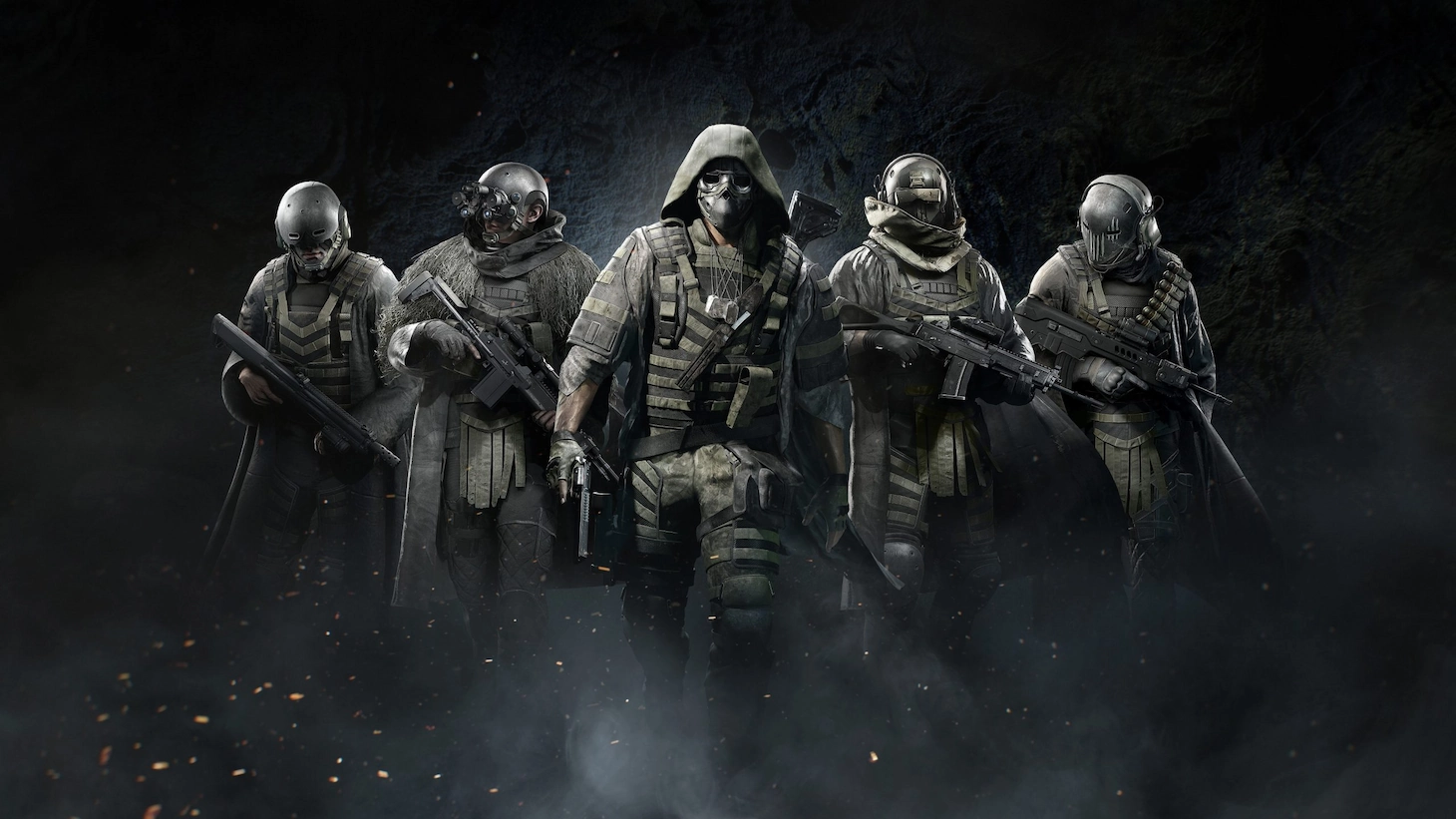
Registration is already open through Ubisoft’s official portal and follows a simple three-stage process. Players first select one supported platform: Ubisoft Connect PC, PlayStation 5 or Xbox Series X/S. They must then sign in using an active Ubisoft account and complete a questionnaire that gives the development team more information about their platform, experience and playing habits. Submitting the form places the applicant inside the selection pool, but it does not provide immediate access or guarantee an invitation. Ubisoft will choose participants according to the requirements of individual closed tests, which means different sessions may target particular regions, hardware configurations, play styles or levels of familiarity with Ghost Recon. No starting date, test duration or number of available places has been announced. The current platform list also indicates that the new project is being developed around current-generation hardware, with no PlayStation 4 or Xbox One version included in the program. PC registration specifically lists Ubisoft Connect rather than Steam or Epic Games Store, though that does not necessarily confirm the storefront arrangement for the eventual release. Anyone selected should also read the invitation and confidentiality conditions carefully before sharing screenshots, recordings or information about the test. Early builds are unfinished by definition, and access to one test may not extend to every future session. Players interested in participating can submit an application through the official Ghost Recon Insider Program page.
feedback matters after breakpoint
Ubisoft’s decision to place community testing at the center of this announcement is difficult to separate from what happened with Ghost Recon Breakpoint. Released in October 2019, Breakpoint attempted to combine tactical shooting with survival mechanics, gear scores, tiered loot and systems that felt more closely related to The Division than to the identity established by earlier Ghost Recon games. Its world was technically large but often felt strangely empty, while the progression structure distracted from the grounded military fantasy many players expected. Ubisoft spent considerable time improving the game after launch, introducing AI teammates, the more customizable Ghost Experience and options that allowed players to reduce or remove several unwanted systems. Those updates proved that Breakpoint could be moved closer to the tactical experience its audience wanted, but they also demonstrated how expensive and difficult it is to repair a project after its central design choices have already been built. The Insider Program gives Ubisoft a chance to receive that criticism much earlier. Weapon handling, enemy awareness, squad control, mission freedom, interface assistance, injury systems, stealth behavior and difficulty balance are all areas where knowledgeable players can identify problems that internal testing may normalize over time. The program will only be valuable if feedback reaches designers early enough to influence decisions rather than merely adjust numbers, but its existence suggests Ubisoft understands that Ghost Recon cannot afford another launch spent negotiating with its own community about what kind of game it is supposed to be.

project ovr and the first-person question
Although Ubisoft has revealed almost nothing about the game itself, reports surrounding the project have circulated for more than two years. Insider Gaming claims that the next entry is known internally as Project OVR or Project Over and is set during a fictional conflict called the Naiman War. According to those reports, the Ghost team enters a hostile Southeast Asian country affected by mass casualties and alleged war crimes, conducting covert operations while searching for a traitor. The game is said to adopt a more serious squad-based military approach, with visual and mechanical influences compared to Call of Duty: Modern Warfare, Squad and Ready or Not. The most controversial claim is that Project OVR is primarily played from a first-person perspective. That would represent a major departure from Wildlands and Breakpoint, where the third-person camera became inseparable from exploration, character customization, cover movement and cooperative play. First-person could strengthen weapon handling, room clearing and close-range tension, especially if Ubisoft is pursuing a heavier milsim direction, but removing third-person entirely would also discard an important part of modern Ghost Recon’s identity. There is room for both perspectives if the systems are designed to support them properly, and this is exactly the kind of issue the Insider Program should expose before release. None of these Project OVR details have been officially confirmed, so they should not be treated as features of the finished game. Ubisoft’s announcement deliberately focused on broad franchise principles rather than perspective, setting or mechanics.

recent reports create legitimate caution
The timing of the Insider Program becomes more interesting when placed beside recent reports about Project OVR’s development. In June, Insider Gaming claimed that the game had failed to meet internal alpha objectives following unrealistic deadlines, weak planning and management problems. Ubisoft reportedly brought additional senior production figures into the project, while developers became concerned about possible crunch and further restructuring. A later report claimed that the game’s scope had been reduced to meet revised deadlines, with proximity mines, helicopters and a more detailed workbench system removed from the current plan. Some additional functions were allegedly postponed until after a future development reassessment. Ubisoft has not confirmed these reports or publicly identified the newly announced game as Project OVR, meaning the connection remains based on information from anonymous sources. Still, the reports should not be ignored simply because the official anniversary presentation was optimistic. If the next Ghost Recon has experienced unstable builds or missed internal targets, a closed testing program could provide useful information, but outside players cannot solve scheduling failures or management problems. Their feedback can reveal whether combat, missions and squad mechanics work; it cannot replace adequate development time. The encouraging part is that Ubisoft did not rush into a release-date announcement. Opening registration without promising a launch window leaves room for testing to expose problems and for the studio to respond. The worrying scenario would be using the program mainly as a stress test while leaving larger design concerns untouched.