ASUS RTX 5060 DUAL ADVANCED ARRIVES | ONE MORE RTX 5060 CHOICE
Another GeForce RTX 5060 has appeared inside an ASUS catalogue that was not exactly short of choices. The company has added standard and factory-overclocked Dual Advanced models, identified as the DUAL-RTX5060-8G-A and DUAL-RTX5060-O8G-A, alongside its existing Dual, Dual EVO and Dual White cards. Both newcomers retain the familiar RTX 5060 configuration with 3,840 CUDA cores, 8 GB of GDDR7 memory, a 128-bit interface and a memory speed of 28 Gbps. Display connectivity also remains unchanged, providing three DisplayPort 2.1b outputs and one HDMI 2.1b port. The word “Advanced” may suggest a substantial revision, but this is not a new GPU configuration, a memory upgrade or a redesigned performance class. It is another compact ASUS Dual implementation with minor clock differences and a new position inside an increasingly crowded product stack.
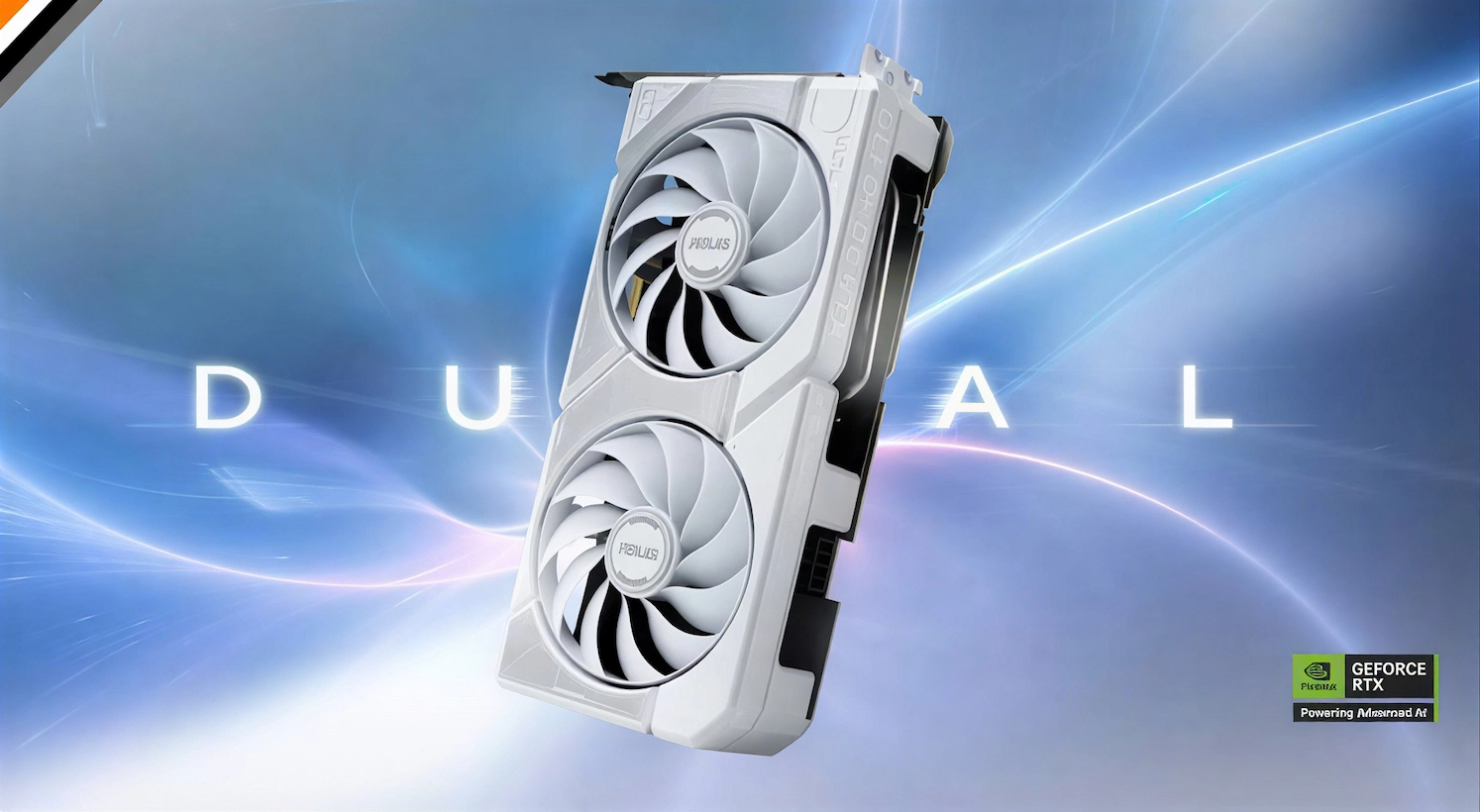
the advanced name carries little hardware change
The standard Dual Advanced reaches a 2,497 MHz default boost clock and 2,527 MHz through its optional OC mode, matching the previously available non-Advanced Dual model. The Dual Advanced OC is the only version showing a measurable frequency increase, running at 2,550 MHz by default and reaching 2,587 MHz in OC mode. The older Dual OC is listed at 2,535 MHz and 2,565 MHz respectively, leaving the new card only 15 MHz faster in its normal profile and 22 MHz faster with OC mode enabled. That difference is too small to produce a meaningful new performance tier and will probably disappear inside ordinary variation between games, temperatures and individual samples. ASUS has effectively created an additional factory-tuned SKU rather than a different RTX 5060 experience.
a proven compact dual-fan design returns
The physical design remains one of the card’s more practical qualities. ASUS uses a 2.5-slot cooler measuring approximately 228 × 123 × 50 mm, with two Axial-tech fans directing air through the heatsink. The fans support 0dB operation during lighter workloads, while dual ball bearings are intended to provide better durability than conventional sleeve-bearing designs. Dual BIOS support allows users to choose between performance and quieter operating profiles without software adjustments. Power comes through one standard eight-pin connector, and ASUS recommends a 550 W power supply. These features make the card straightforward to install in compact or conventional gaming systems without requiring an oversized triple-fan cooler or a newer power connector. The design is sensible; it simply is not new enough to explain why another almost identical model needed to exist.
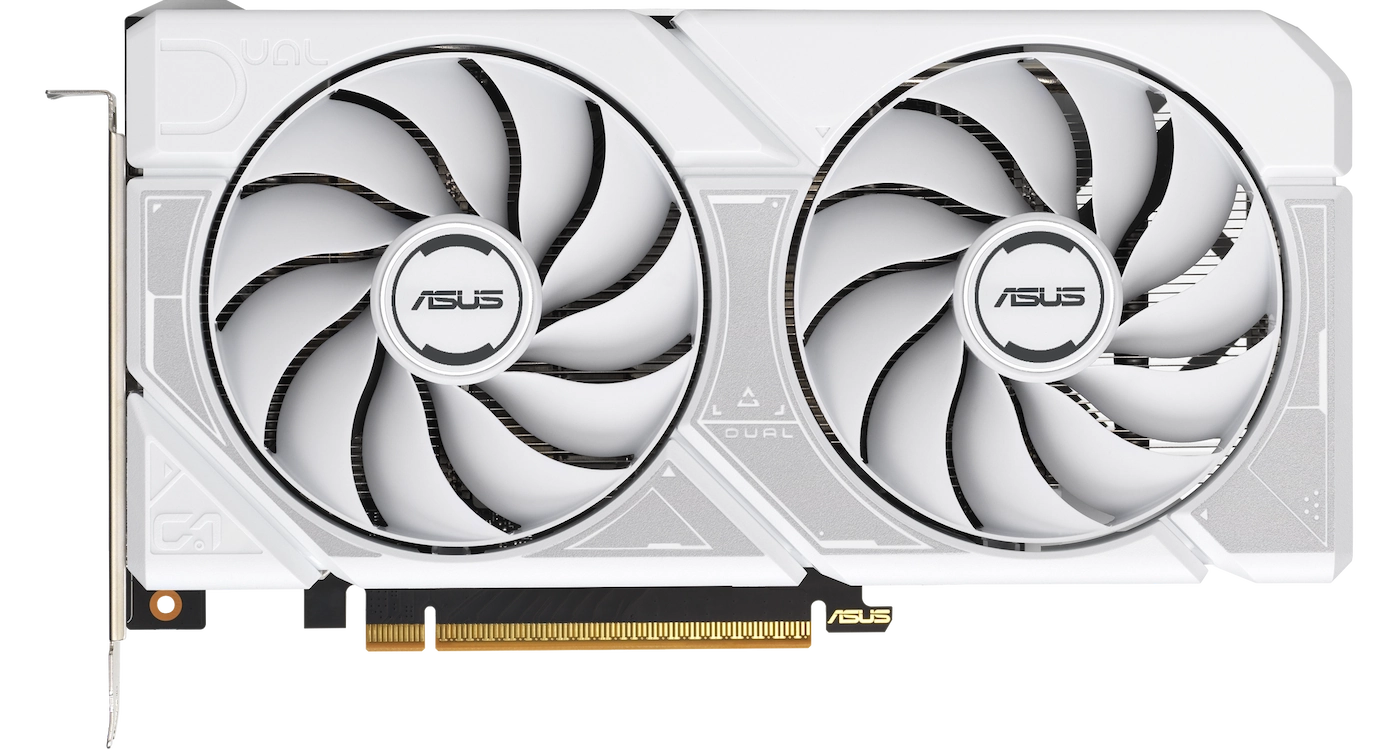
eight gigabytes remain the larger concern
Like every standard desktop RTX 5060, the Dual Advanced carries 8 GB of GDDR7 memory. The fast 28 Gbps modules provide respectable bandwidth, but capacity remains a more serious long-term question than the extra 22 MHz attached to the Advanced OC name. The RTX 5060 is aimed primarily at 1080p gaming and supports Blackwell features such as DLSS 4, Multi Frame Generation and fourth-generation ray-tracing hardware. Those technologies can substantially improve frame rates in supported games, but they do not increase the physical memory available for textures, geometry and other assets. ASUS cannot solve that limitation through a board-partner redesign, yet it makes the growing number of similar 8 GB models feel even less important. Buyers are likely to gain more by comparing real prices, cooling behaviour and warranty conditions than by selecting the card with the longest suffix.