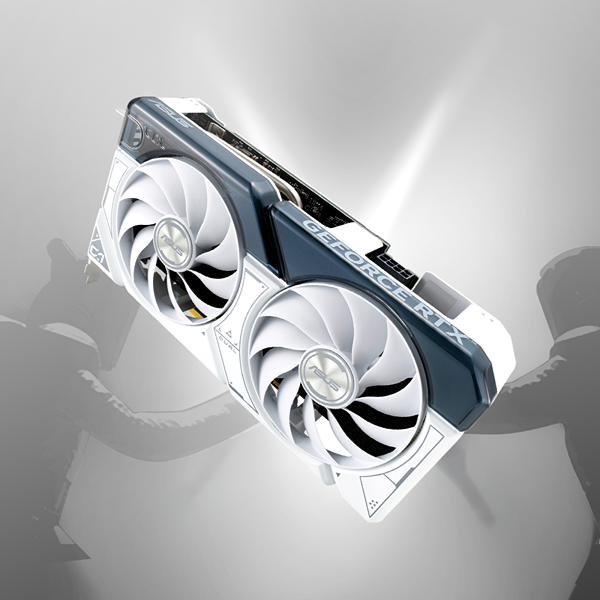
RECENZIJA | ASUS DUAL RTX 4060 TI 16GB | THE BALANCE I CHOSE TO LIVE WITH
Welcome to pcdoors. Every site needs a first article, and there is something strangely appropriate about opening this one with a piece of hardware that is not sitting on a test bench, waiting to be boxed up and returned, but inside my own PC. The ASUS Dual GeForce RTX 4060 Ti 16GB has been part of my machine long enough for the novelty of ownership to disappear and for the things that actually matter to become much easier to see. That also means I am walking into this review with a little more emotional baggage than usual. I like this graphics card. I know how it behaves when a game suddenly pushes harder than expected, I know what it sounds like under load, I know how little attention it demands during normal use, and I have developed the kind of trust in it that only comes from living with hardware rather than benchmarking it for a weekend. Still, good personal experience cannot be allowed to turn a review into a love letter. The RTX 4060 Ti 16GB arrived with legitimate weaknesses, an awkward price, and architectural decisions that deserved criticism then and still deserve it now. My goal here is therefore simple: to separate affection from evidence as much as possible and ask whether the card I have come to regard as one of the most balanced parts of my system actually deserves that reputation. The answer, as it turns out, is a little more interesting than the reputation this GPU received at launch.

the idea behind the 4060 ti 16gb
Strip away the arguments that surrounded its launch and the basic idea behind the RTX 4060 Ti 16GB is remarkably sensible. NVIDIA built it around the Ada Lovelace architecture with 4,352 CUDA cores, a boost clock around 2.54 GHz on the reference specification, third-generation RT cores, fourth-generation Tensor cores and a 16GB GDDR6 memory pool connected through a 128-bit interface. The ASUS Dual model reviewed here keeps the same fundamental GPU configuration, with a listed default boost of 2535 MHz and an OC mode of 2565 MHz, 18 Gbps memory, one conventional 8-pin power connector and a compact 2.5-slot body measuring only 227.2 mm in length. Asus lists the card with one HDMI 2.1a output and three DisplayPort 1.4a connectors, making this a physically uncomplicated card to integrate into a modern system. None of those numbers individually turns heads in 2026, but together they reveal what I think NVIDIA was trying to build: a mainstream GPU that does not require an oversized chassis, a huge power supply or an expensive cooling solution, while carrying enough memory to avoid becoming obsolete simply because game textures became more demanding. The problem was never that this concept lacked logic. The problem was that NVIDIA initially asked too much money for it.


compact without feeling cheap
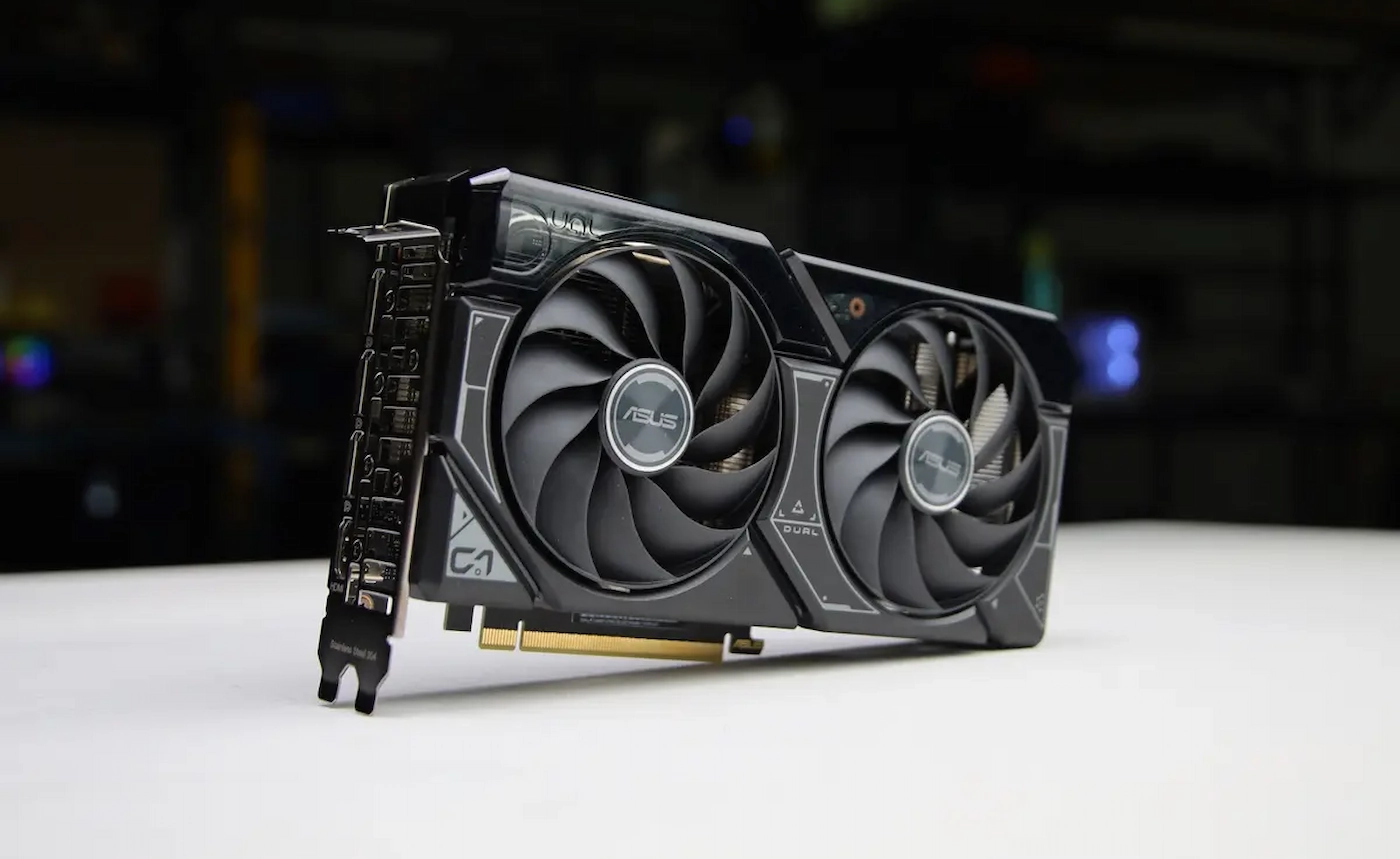
ASUS deserves some credit for resisting the strange modern tendency to make every graphics card look as if it should have its own postal code. The Dual is compact, visually restrained and mechanically straightforward, yet it does not feel like the sort of stripped-down board partner model built only to reach the lowest possible price. ASUS uses two Axial-tech fans, dual-ball bearings and a 2.5-slot cooler, while related Dual 4060 Ti 16GB variants also carry the company’s 0dB fan-stop implementation and protective backplate. The result is exactly the kind of graphics card I prefer inside a real everyday PC: it fits without drama, leaves breathing room around other components, uses a normal 8-pin connector and does not make cooling the rest of the system somebody else’s problem. There are bigger cards with more extravagant heatsinks, more fans, screens, lighting and enough metal to qualify as small furniture, but none of those things automatically makes a GPU better to live with. The ASUS Dual’s restraint is one of its strengths. In my own system it has been exceptionally well behaved thermally, typically sitting in the high-40s to low-50s Celsius range during gaming, with the sort of thermal headroom that makes the cooler feel almost oversized for the amount of heat Ada actually produces here. That is not a universal benchmark claim; it is my own experience with this specific card and system. More importantly, it is experience accumulated over time rather than during one carefully controlled afternoon.
1080p-where everything clicks
This is where I understand the RTX 4060 Ti 16GB better than I did when reading the launch coverage. At 1080p it simply makes sense. Raw raster performance is strong enough to run modern games at high or ultra settings without making every graphics option a negotiation, while the 16GB buffer removes one of the more uncomfortable questions surrounding many mainstream GPUs: whether memory capacity will become the first thing that forces compromises. NVIDIA itself positioned the 4060 family heavily around 1080p gaming, and the silicon feels most comfortable there. It is not a card designed to win screenshot wars against flagship hardware, nor should it be judged as one. What it delivers instead is an unusually relaxed 1080p experience. High-refresh gaming is realistic in lighter or well-optimized titles, more demanding games remain within reach at strong image-quality settings, and DLSS gives the GPU another layer of flexibility when native rendering becomes unnecessarily expensive. That matters more to me than chasing a specification-sheet victory. A graphics card should ideally disappear once the game starts. You should not constantly be thinking about whether its VRAM is full, whether the power supply is being stressed, whether the temperature is climbing or whether one more graphics setting will finally break the experience. The 4060 Ti 16GB often manages exactly that at 1080p, which is why I consider it such an effective center point for a balanced gaming PC.

1440p-capable, but no longer effortless
Move to 1440p and the personality changes. The card is still perfectly capable of good results, but this is where the word “balanced” needs to be used honestly rather than romantically. The RTX 4060 Ti can play at 1440p and often play very well, particularly with DLSS available, but its raw rendering resources and memory bandwidth begin to matter much more. You cannot simply look at the 16GB figure and assume the card has suddenly become a high-end 1440p GPU. It has not. The memory capacity gives it space; it does not give it additional shader throughput or a wider memory interface. In lighter titles and games that respond well to DLSS, 1440p is an entirely reasonable target. In heavier releases, especially with ray tracing, some combination of reduced settings, upscaling or Frame Generation becomes increasingly valuable. That distinction is important because 16GB sometimes causes people to judge this card by expectations better suited to a much faster GPU. The extra memory prevents one type of bottleneck, but it cannot erase every other one. I still consider 1440p a legitimate use case, not an emergency fallback, but if somebody told me they were building a system specifically for uncompromised high-refresh 1440p gaming, this would no longer be my automatic recommendation. At 1080p it feels comfortably in command. At 1440p it starts asking you to understand what you are buying.
16gb the decision that aged better than the reviews
If there is one aspect of this card that has become easier to defend with time, it is the 16GB memory configuration. At launch, the uncomfortable part was obvious: NVIDIA charged $499 for the 16GB model, $100 more than the 8GB RTX 4060 Ti, while the actual GPU remained essentially the same. In games that did not exceed an 8GB memory budget, reviewers consequently found little or no performance difference. TechSpot’s original 15-game average showed only a small overall advantage for the 16GB card because most tested titles were not memory-limited. That criticism was completely fair. But memory capacity is one of those specifications whose value is not always visible on launch day. Later testing with more demanding games has shown exactly why the larger buffer matters. TechSpot found situations such as Horizon Forbidden West at 1440p where the 16GB 4060 Ti produced substantially better frame-time behavior and performance than the 8GB version once memory requirements became the limiting factor. That does not suddenly make every game faster, and it certainly does not justify pretending the original $100 surcharge was elegant pricing. What it does mean is that the 16GB version is the one I would want to own long term. A graphics card can recover from not being the fastest product in its class. Recovering from simply not having enough memory is much harder.

the 128-bit bus-the compromise that never left
Now for the part I cannot defend away: the 128-bit memory interface. The card pairs its 16GB of 18 Gbps GDDR6 with a 128-bit bus and roughly 288 GB/s of conventional memory bandwidth. Ada’s larger cache hierarchy helps reduce the practical impact compared with what those numbers would suggest on an older architecture, but physics has not been cancelled. As resolution rises and workloads demand more bandwidth, the narrow interface becomes one reason the card does not scale as aggressively as its memory capacity might imply. This is also why I dislike descriptions of the 4060 Ti 16GB as either a complete failure or an obvious high-end bargain. Both miss the point. The bus is a genuine limitation, but the 16GB buffer is a genuine strength, and both things can be true at the same time. I would have loved to see this GPU with a wider interface because it would have made the product far easier to recommend without qualification, particularly at 1440p. NVIDIA chose efficiency, cache and a smaller memory subsystem instead. The result works extremely well inside its intended performance envelope but becomes visibly less elegant when pushed beyond it. That is the architectural compromise I notice most, and it is probably the single technical reason this card stops at 86 rather than wandering into the 90s.
dlss, ray tracing and the ada advantage
Raw raster performance tells only part of the story because Ada Lovelace’s feature set remains one of the strongest arguments for owning an RTX 40-series GPU. nvidia lists DLSS 3.5 support with Super Resolution, DLAA, Ray Reconstruction and Frame Generation, alongside Reflex and the generation’s updated ray-tracing and Tensor hardware. I understand the instinct to dismiss generated frames or upscaling when comparing GPUs purely as pieces of silicon, but I do not buy graphics cards to admire silicon. I buy them to play games. When DLSS implementation is good, it materially extends the range of settings and resolutions this card can handle. Frame Generation is not a replacement for strong base performance and should never be treated as free conventional frames, yet once the underlying frame rate is healthy it can make demanding games feel significantly smoother. Ray tracing is similar. The 4060 Ti does not have enough brute force to make every heavy RT workload trivial, especially at higher resolutions, but DLSS and Frame Generation give it room to engage effects that would otherwise require much more expensive hardware. Add AV1 support for encoding and a mature NVIDIA software ecosystem, and the card becomes more versatile than an FPS chart alone suggests. These features are not excuses for insufficient raw performance. They are additional tools, and on a balanced midrange GPU, useful tools matter.
efficiency, temperatures and the pleasure of uneventful hardware
Perhaps the most underrated quality of the RTX 4060 Ti is how little electricity it needs to do its work. NVIDIA specifies the family around a roughly 160W-class power envelope, and independent testing consistently showed the 16GB model remaining extremely power-efficient despite doubling the memory capacity of the original 8GB card. That characteristic transforms the ownership experience in ways a benchmark chart rarely communicates properly. Lower power means less heat dumped into the case, less work for the GPU cooler, less work for chassis fans, less demand on the power supply and generally fewer reasons for the computer to become acoustically irritating. ASUS recommends a 650W PSU for this model, but the actual GPU itself is remarkably modest by modern performance-card standards. This is one of the reasons I describe it as balanced rather than merely fast. There are GPUs that can deliver significantly higher frame rates, but they also ask for more money, more electricity, more cooling and frequently much more physical space. The ASUS Dual 4060 Ti 16GB sits in my system and behaves almost like a much less capable card until a game needs it. That is a compliment. Hardware that spends its life demanding attention eventually becomes exhausting. Hardware that quietly does exactly what you bought it to do tends to earn affection.
the mistake that defined its reputation
I cannot rewrite 2023 simply because I like the card today. The $499 launch price was too high. NVIDIA was charging a substantial premium over the 8GB model for additional memory without giving buyers a corresponding increase in core GPU performance, and professional reviews reacted accordingly. Tom’s Hardware highlighted the weak value proposition and the unchanged 128-bit interface, while TechSpot was even harsher about what the extra $100 actually delivered in games that were not VRAM-limited. That launch decision followed the card around for years and, to a large extent, still defines how people talk about it. I think that history is deserved, but I also think it has sometimes obscured the distinction between a badly priced product and a bad product. They are not the same thing. At $499 in 2023, the 4060 Ti 16GB was difficult to recommend on value. At the right price, however, the underlying hardware makes considerably more sense. In 2026, that distinction becomes even more important because newer GPUs exist and therefore establish a very clear ceiling on what anybody should pay for remaining 4060 Ti 16GB stock or a used card. I would not tell someone to chase this model regardless of price simply because I own one. I would tell them that, priced correctly, it remains one of the more complete and easy-to-live-with 1080p graphics cards of its generation.

living with it-why my opinion became better, not worse
The strangest thing about this review is that my opinion of the RTX 4060 Ti 16GB has improved with ownership rather than deteriorated. Hardware enthusiasm often works in the opposite direction: the first weeks are exciting, then the compromises slowly become more visible. Here, most of the compromises were already obvious from the specification sheet. I knew about the 128-bit bus. I knew it was not a 4K card. I knew the launch pricing had been ugly. What became clearer over time were the qualities that are much harder to communicate during launch-week benchmarking: how cool it runs, how little power it asks for, how comfortably 16GB removes memory anxiety, how practical the ASUS Dual dimensions are, how useful DLSS becomes when a particularly demanding title arrives, and how rarely the card makes me think about the card. That last point sounds almost absurd in a graphics-card review, but it matters. The best component in a system is often the one that stops being a component and simply becomes part of the machine. I do not need the 4060 Ti 16GB to be the fastest GPU available. I need it to make sense in the system around it. For the way I use my PC, it does. That personal experience inevitably gives this review some warmth, but it is not enough to erase the flaws. It simply explains why, after living with those flaws, I still consider the total package unusually well judged.